Topic field
Grid & low voltage
Digital secondary substations, grid state, redispatch, grid connection.
30 minutes on the project that's pressing for you right now. No sales loop.
In short
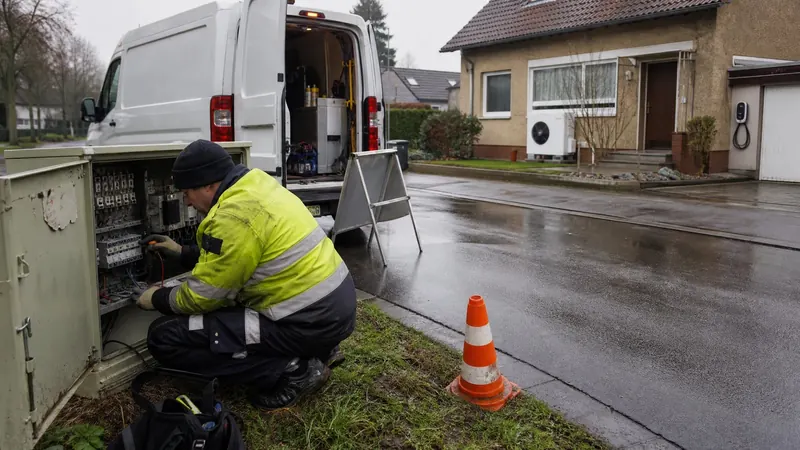
Low voltage is the grid level that heat pumps, wallboxes, PV systems and storage are connected to, and until recently nobody measured anything there. That is now changing: grid state estimation, digital secondary substations and redispatch 2.0 make the level visible and controllable. The effort rarely sits in the metering hardware. It sits in grid data that nobody had to maintain before.
Low voltage is becoming an active part of the grid: heat pumps, wallboxes, PV and storage change load flows nobody used to measure. We order the projects around grid state estimation, digital secondary substations, redispatch and grid connection and put them in a sequence that keeps the grid stable and meets the deadlines.
innobu has delivered in this field itself.
Services for this field
Knowledge
Articles in this field
30 articles, newest first.
- VDE-AR-N 4105 and 4100: new low-voltage rules
- Grid expansion plan 14d EnWG: 31 October 2026
- AI in grid state determination: what measurement has to deliver
- 2027 Network Charges: The 15 October Deadline
- NEST Gas: the rate of return is one parameter, the rulebook is being swapped
- Grid Scenarios 2027: What Sits in the Distribution Grid
- Underground Cable Monitoring: DTS and RTTR
- DERMS: Distribution Grid Orchestration
Glossary terms
- Controllable consumer device (SteuVE)
- Digital secondary substation
- Digital Twin
- Distribution system operator (DSO)
- EnWG (Energy Industry Act)
- Federal Network Agency (BNetzA)
- Grid state estimation
- Grid-oriented control
- Load forecasting
- NEST (incentive regulation)
- OT security
- Predictive maintenance
- Quality regulation
- Redispatch 2.0 and 3.0
- Transmission system operator (TSO)
Let's collaborate
Talk to us about this field
Thirty minutes on what you're working on, whether grid, metering, market processes, IT architecture or AI. Afterwards you'll know how we'd approach it and who would sit at the table.
Energy and measurement technology since 2010 · innobu GmbH since 2014 · Based in Schleswig-Holstein, Germany
Whoever pitches also delivers: whoever leads the first call stays your contact right through to the steering committee, with established partners in the project. Direct: info@innobu.com