Service · Regulation
Regulatory translation for German energy utilities: § 14a, MsbG, NIS2 and MaKo become requirements with a date
Law and regulatory rulings become requirements your systems and programmes can be built to, each with a date and an owner.
30 minutes on the project that's pressing for you right now. No sales loop.
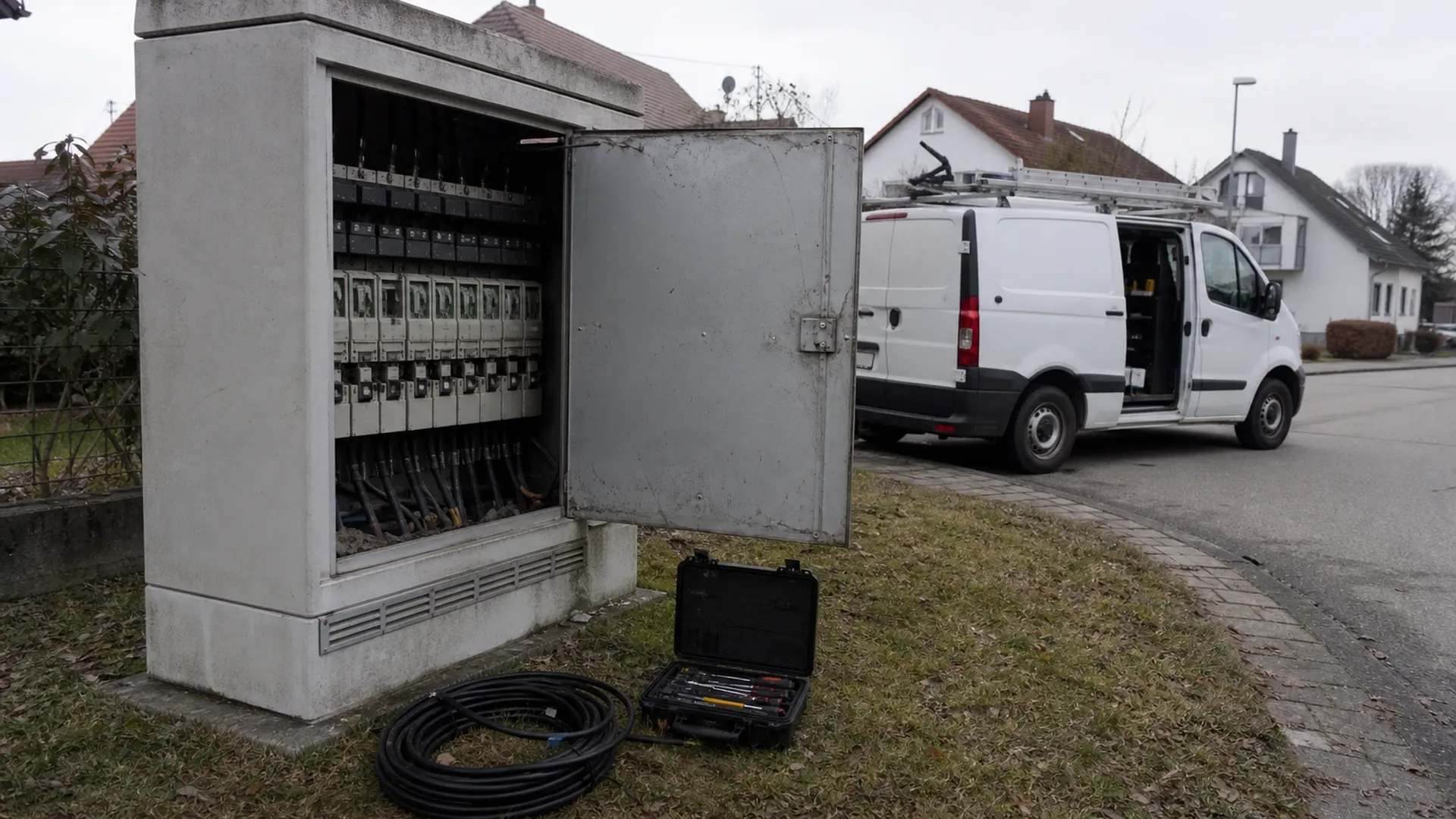
Between a ruling of the Federal Network Agency and a working process lie requirements nobody writes, because regulatory affairs speaks one language and IT another. innobu translates: § 14a and control, MsbG and rollout quotas, NIS2 and the IT security catalogue, MaKo releases and AgNes.
Summary
Regulatory translation means: a law, a ruling or an application guide is translated into concrete requirements for processes and systems, each with a deadline, an owner and the evidence the regulator will ask for. innobu covers the obligations that hit German grid operators, metering operators and suppliers at the same time in 2026 and 2027: § 14a EnWG, MsbG and rollout quotas, NIS2 and § 5c EnWG, the KRITIS umbrella act, MaKo releases, MiSpeL and AgNes.
Who this service is for
- Head of grid and regulatory affairsYou know the rulings, but the translation into programmes and systems stalls because everyone waits for someone else.
- Metering point operatorsRollout quotas, gateway certification, § 14a control and the new metering contracts run in parallel, and the regulator is watching.
- Head of IT and information securityNIS2 applies without a transition period, § 5c EnWG requires attack detection, and nobody has written down the requirements for control systems and back ends.
- International vendorsYou sell into German utilities and need the obligations of your customers translated into what your product has to support.
Service
What you get
Regulatory map with deadlines
All obligations of your company on one map: law, ruling, date, affected role, status. The basis is our deadline calendar, adapted to your divisions.
Requirements teams can work off
§ 14a, MsbG, NIS2 or a MaKo notice become requirements with acceptance criteria. Each one names the system it lands in and who owns it.
Programme and architecture requirements
Which programmes an obligation triggers, which systems change, where dependencies to rollout, portals or IS-U lie.
Evidence for the regulator
What the Federal Network Agency, the BSI or the auditor want to see is documented at the end: quotas, registrations, attack detection, contracts.
Support until acceptance
We stay in the programmes until the requirements are implemented and accepted, not until the document is finished.
Process
How it works
Four stages, a tangible result after each.
Obligation inventory
We match your divisions and roles against the laws and rulings in force and get the map of open obligations, dated.
Translation into requirements
Per obligation we write requirements with acceptance criteria and assign each one to a system and an owner.
Placement in the portfolio
Requirements become work packages in existing or new programmes, sequenced by deadline and dependency.
Implementation and evidence
We support the implementation, check acceptance and compile the evidence the regulator expects.
Evidence
Backed by
Before our programme work in the energy industry, we ran a manufacturer of compressed air and gas measurement technology, around 30 people directly and roughly 100 indirectly, and co-founded its Scandinavian subsidiary. Consumption, flow, dew point and leakage on the industrial demand side: metering is not new territory for innobu. For scale and cover there is a curated partner network, softstack for development, Horizonte for strategy and organisation, SmartOptimo for metering and rollout. Full background.
How we read a ruling and break it down into requirements is public in our handbook Digitalising the Energy Transition: eight chapters from the Metering Point Operation Act to market communication, every claim sourced.
Questions
Frequently asked questions
Grid operators must connect controllable consumption devices such as heat pumps and wallboxes, be able to dim them to 4.2 kW in a congestion and grant reduced grid charges in return. Until end of 2028 the transition period with preventive control applies, from 2029 grid-oriented control based on grid state data. This requires a control box, gateway connection, grid state estimation and adapted billing.
Under MsbG, default metering point operators had to equip 20 percent of mandatory cases by end of 2025, 50 percent by end of 2028 and 95 percent by end of 2030. The Federal Network Agency has been running supervisory proceedings against laggards since March 2026.
Usually yes. The German implementation act has applied since 6 December 2025 without a transition period to energy suppliers and grid operators, with registration, risk management, reporting within 24 and 72 hours and personal liability of management. For grid operators the IT security catalogue under § 5c EnWG with attack detection comes on top.
With notice no. 56, 26 EDIFACT formats and AS4 adjustments become binding on 1 October 2026. Grid operators, suppliers and metering operators are affected and have to prepare test schedules, clarification processes and fallback scenarios.
innobu writes the requirements, places them in the portfolio, steers the implementation by internal teams and vendors and checks acceptance. For working prototypes and automation innobu works on the code itself; implementation in core systems stays with your vendors.
The basis is the deadline calendar on innobu.com with date and source per entry. It is maintained with every new article; changed deadlines such as the dropped KRITIS registration deadline are corrected with a date.
Let's collaborate
Next step
Which obligation presses hardest: § 14a, the rollout quota, NIS2 or the MaKo release in October? In a first conversation we put your deadlines on the table and name what to do first.
Energy and measurement technology since 2010 · innobu GmbH since 2014 · Based in Schleswig-Holstein, Germany
Whoever pitches also delivers: whoever leads the first call stays your contact right through to the steering committee, with established partners in the project. Direct: info@innobu.com