
Quality Regulation 2026, the BNetzA Data Collection and the Evolution of SAIDI
On 26 February 2026 the Large Ruling Chamber set out which values electricity distribution grid operators must supply on the quality of their network. SAIDI, the familiar outage figure, stays. What is new is network capacity, the question of whether a grid can actually absorb heat pumps and wallboxes. It sounds technical. For distribution grid operators it is first a data task with a deadline, and in the end it is about their own revenue cap.
With the data collection ruling of 26 February 2026 (reference GBK-26-02-1#1), the Bundesnetzagentur extends incentive regulation with a hard quality component. Quality will be measured in three dimensions: network reliability via SAIDI and SAIFI, network capacity with the components energy-transition competence and digitalisation, and network service quality, such as meeting deadlines in market communication under GPKE and WiM. The legal basis is section 29 subsection 1 in conjunction with section 21a subsection 3 sentence 3 numbers 5 and 11 EnWG. SAIDI stays central, but the treatment of extreme weather and planned interruptions is set to change. The electricity value was 11.7 minutes in 2024, after 12.8 minutes the year before. The genuinely new part is network capacity, whose data collection runs from March to April 2026 as part of the energy monitoring survey, with the annual energy drawn at the grid connection point as the mandatory core. Reliability data continues to be reported separately under reference BK8-23/001-A. The financial effect on the revenue cap is planned for the fourth regulatory period from 2029. For distribution grid operators the message is simple: supply data cleanly and auditably, because it will help set the permitted revenue.
What the 2026 data collection ruling requires
Quality was long a side issue in incentive regulation. There was a quality element on a SAIDI basis, a bonus or malus next to the actual cost formula. Nothing more. That is changing.
With the ruling of 26 February 2026, the Bundesnetzagentur is gathering the data it needs to make quality a standalone metric alongside costs. The Large Ruling Chamber issued it under reference GBK-26-02-1#1, and the legal basis is section 29 subsection 1 in conjunction with section 21a subsection 3 sentence 3 numbers 5 and 11 EnWG. The order matters: the ruling covers the data collection, not yet the finished incentive formula. First the figures, then the metrics, then the money.
Every electricity distribution grid operator is affected, from the large area network to the municipal utility. The survey is part of the annual energy monitoring collection, so it runs through a channel the operators already know. What is new is what is being asked.
Three dimensions of quality regulation
Quality is not one thing. The authority splits it into three areas that are measured separately and later backed by incentives separately. Only together do they form the picture of a good network.
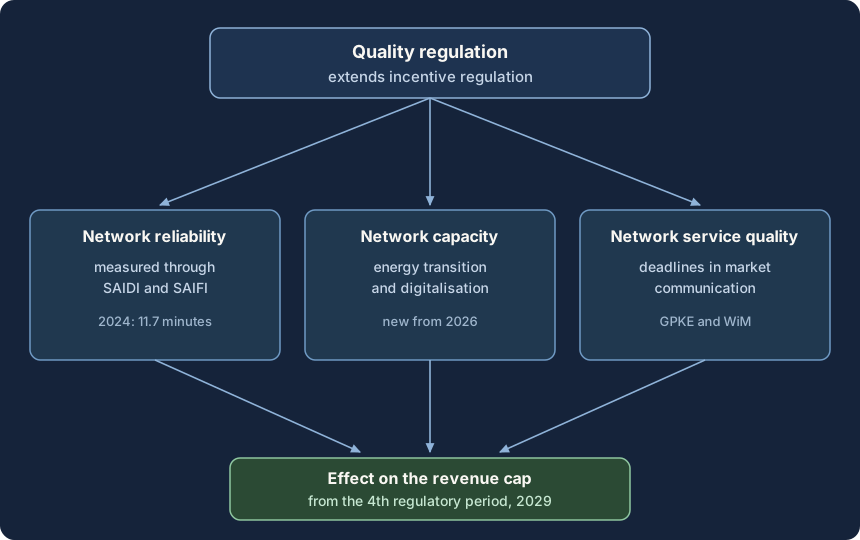
- Network reliability: how rarely and how briefly supply fails, measured via SAIDI and SAIFI. The classic, established for years.
- Network capacity: whether the grid can absorb the uptake from the energy transition, such as processing connection requests and the occurrence of bottlenecks. The real novelty.
- Network service quality: the administrative processes, for example meeting deadlines in market communication under GPKE and WiM.
The shift behind it is the interesting part. Reliability asks whether the power is there. Capacity asks whether it will still be enough tomorrow, once three heat pumps and two wallboxes join the neighbourhood. That second question is exactly what the old regulation barely rewarded.
SAIDI and SAIFI, what stays and what changes
The two figures have been the heart of reliability measurement for years. They stay. SAIDI measures the average outage duration per end consumer and year, SAIFI the average frequency. What changes is the question of which events count at all.

A look at the numbers puts it in context. The German electricity SAIDI was 11.7 minutes in 2024, after 12.8 minutes in 2023 and a ten-year average of 12.7 minutes. For 2024, 830 grid operators reported a total of 164,645 supply interruptions in low and medium voltage, around 6,300 more fault reports than the year before. Even so, the average duration fell. The German grid remains one of the most reliable in Europe.
And that boundary is the sticking point. As storms grow more frequent, they distort the picture of baseline reliability, even though the grid operator did nothing wrong. The authority therefore wants to rework the treatment of extreme weather events, and of planned interruptions too. It sounds like a detail. For an operator whose revenue will hinge on the value, it is not.
Network capacity as a new metric
This is the genuinely new part. Until now, regulation mainly rewarded low costs. A grid that invested heavily in capacity could even look worse in the efficiency comparison than one running on the edge. The new dimension reverses that incentive.
Network capacity has two components: energy-transition competence and digitalisation. Among other things, it is meant to measure how quickly connection requests are processed and where bottlenecks arise. The mandatory core of the 2026 data survey is plain at first: the annual energy drawn at the grid connection point. Many finer technical fields that were proposed initially were dropped again during the procedure. Grid operators had criticised the effort.
Anyone who wants to report the state of their grid reliably needs visibility down into the field. That is exactly the point of low-voltage monitoring via digital secondary substations: without measurements from the local grid, the question of bottlenecks stays a guess. And whoever wants to spot bottlenecks before reporting them can hardly avoid congestion analysis in the distribution grid. Quality regulation turns that visibility into a value that pays off.
The new metric rewards, for the first time, what the energy transition really needs: a grid that absorbs new load, not one that is merely cheap. Investment in capacity moves from a cost risk to a quality advantage.
What distribution grid operators must supply now
For grid operators, the ruling first becomes a plain data task with a tight window. Anyone who does not already keep the values clean has to pull them together from scattered systems at short notice, exactly as the reporting duty for energy market data under § 111g EnWG demands. Three things are concrete now.

Concrete steps for the 2026 report
-
Meet the window
The network capacity survey runs from March to April 2026 as part of the energy monitoring collection. So clarify responsibilities and data access early, not once the form is already open.
-
Keep the two channels apart
Network capacity runs through the new ruling, the reliability data still separately under reference BK8-23/001-A. Confuse the two reporting paths and you report twice or with gaps.
-
Ensure auditability
The annual energy drawn at the grid connection point and the SAIDI and SAIFI values must be consistent, traceable and evidenced. They later help set the revenue cap, so the same care applies as for billing-relevant data.
The context is familiar. How seriously the authority takes reporting duties is clear from the BNetzA's handling of the smart meter rollout, where delay is sanctioned. And how strongly data quality ultimately feeds through to the revenue side is set out by the reform of industrial network charges. Quality regulation is the next building block in the same logic.
The road into the fourth regulatory period
The data collection is preparation, not result. From the reported values the authority first derives the metrics and then the financial incentives. The sharp effect comes later, but the course is being set now.
- Method from data: from the values collected in 2026, the Bundesnetzagentur develops the metrics and the valuation method for the actual quality regulation.
- Effect from 2029: the financial effect on the revenue cap is planned for the fourth regulatory period, which begins in 2029.
- Bonus and malus: better quality can justify higher network charges, worse quality lowers the permitted revenue. Quality becomes part of the business model.
Honestly, the real effort lies not in the report itself but before it. Whoever keeps their grid data structured, auditable and current today reports almost in passing in 2026 and enters the 2029 assessment with evidenced figures. Whoever starts only then reports under pressure and with estimates. The difference is not an IT question but one of preparation.
Quality regulation shifts the competition between grid operators from pure cost efficiency towards reliability, capacity and service. The 2026 data are the foundation, the effect on the revenue cap arrives in 2029. Preparation beats catching up.
Deadline, market roles, systems
1 January 2029NEST: fifth regulatory period, electricityRegulatory ruling · adopted
If the deadline is missed: Money is lost From 2029 the regulator sets annual bonuses or deductions on the revenue cap where a network operator's reliability deviates from the reference value (quality element, ruling GBK-24-02-1#4, operative item 5.4.1). It can enforce other duties under the NEST rulings under Section 65 EnWG. Legal basis ↗
- Electricity grid operatorrole obligationEnters the fifth electricity regulatory period; from 2029 network reliability affects the revenue cap as a quality element.Typically affected: Regulatory management, controlling
A classification for typical market roles, not a review of your individual case and not legal advice. Whether an obligation applies to your company (thresholds, exemptions) is for your legal department or counsel to confirm. The calendar doesn't replace your own deadline review. Information as of: 13 October 2026.
Further information
Frequently asked questions
The Bundesnetzagentur's Large Ruling Chamber determined on 26 February 2026, under reference GBK-26-02-1#1, which data electricity distribution grid operators must supply for the further development of quality regulation. The legal basis is section 29 subsection 1 in conjunction with section 21a subsection 3 sentence 3 numbers 5 and 11 EnWG. The ruling covers the data collection, not yet the finished incentive formula.
SAIDI, the System Average Interruption Duration Index, measures the average duration of unplanned supply interruptions per connected end consumer and year. For electricity it was 11.7 minutes in 2024, after 12.8 minutes in 2023 and a ten-year average of 12.7 minutes. Planned interruptions and force majeure events do not count.
Network capacity is the new third metric alongside reliability and service quality. It has two components, energy-transition competence and digitalisation, and measures whether a grid can absorb the uptake from heat pumps and charging infrastructure. Its data collection runs from March to April 2026 as part of the annual energy monitoring survey.
The data collected in 2026 serves the method development. The financial effect on the revenue cap is planned for the fourth regulatory period from 2029. Better quality can then justify higher network charges, worse quality lowers the permitted revenue.
For network capacity, the mandatory core of the 2026 survey is the annual energy drawn at the grid connection point, many technical detail fields were dropped during the procedure. The reliability data continues to be reported separately under reference BK8-23/001-A. All values must be consistent and auditable, because they later help determine the revenue cap.
Let's collaborate
One contact, a team behind it
Thirty minutes on what you're working on, whether grid, metering, market processes, IT architecture or AI. Afterwards you'll know how we'd approach it and who would sit at the table.
Energy and measurement technology since 2010 · innobu GmbH since 2014 · Based in Schleswig-Holstein, Germany
Whoever pitches also delivers: whoever leads the first call stays your contact right through to the steering committee, with established partners in the project. Direct: info@innobu.com