Tool · Guide
Master Enterprise Architecture: Clean Core with SAP
How to move from monolithic ERP to an agile, value-driven architecture with SAP BTP, LeanIX & Signavio - without losing control.
- 25 min read
- 14 frameworks compared
30 minutes on the project that's pressing for you right now. No sales loop.
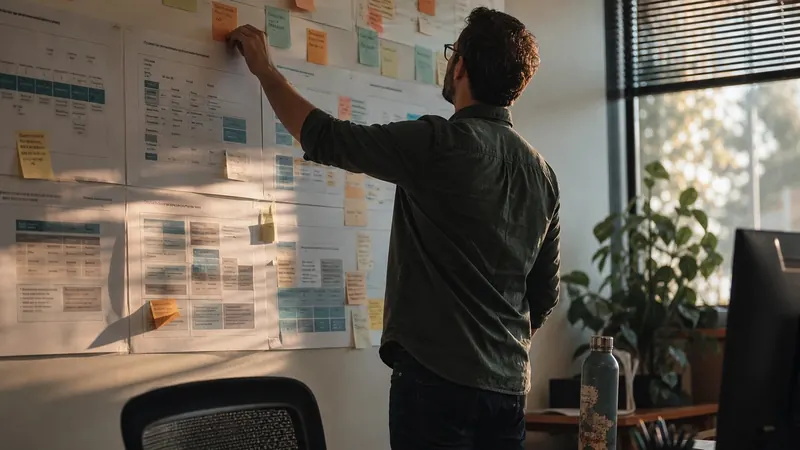
This guide shows how to combine TOGAF, ArchiMate, BPMN, and SAP EAF effectively. Clean Core separates stable standard processes from fast innovation on SAP BTP. LeanIX makes your application landscape transparent, Signavio connects processes and value streams. An Architecture Board enforces principles, guardrails, and clear decision paths.
- EA is the control center of your transformation - focused on business value.
- Clean Core separates stable standard processes (S/4HANA) from fast innovation (side-by-side on SAP BTP).
- SAP Enterprise Architecture Framework plus Metro Map provide cadence and method.
- LeanIX makes your application landscape transparent; Signavio connects processes and value streams.
- Governance via an Architecture Board enforces principles, guardrails, and clear decision paths.
- For CIOs, Enterprise Architects, Domain Leads, Program Managers (RISE with SAP), Data & Security leaders.
Why Now? Strategic Context
The shift to cloud, SaaS, and event-driven architectures demands new rules. With Clean Core, BTP extensions, and robust governance you reduce upgrade costs, accelerate change, and stay compliant.
Cost
Less customization in the core reduces upgrade and maintenance costs. Rationalization eliminates license and operational duplicates.
Agility
Side-by-side extensions on BTP deliver fast innovation without touching the core - secure, versionable, scalable.
Compliance
Strong governance, ADRs, and guardrails protect Clean Core principles - auditable, repeatable, provable.
AI Readiness
Clean data models, events, and APIs are the foundation for analytics, GenAI, and automation.
Cloud / RISE
From lift-and-shift to transformation: instance strategy, integration strategy, and phases from a single source.
M&A
Faster carve-out and PMI: analyze capability overlap, realize integration savings, control risks.
Frameworks Overview
TOGAF provides the method, ArchiMate the language, BPMN the process view. SAP EAF grounds everything for S/4HANA, BTP, and integration - complemented by ITIL/COBIT for operations.
TOGAF
Scope:
Complete EA lifecycle (ADM).
Strengths:
Methodology, artifacts, governance.
Use for:
Structured transformation, architecture processes.
ArchiMate
Scope:
Modeling of business, application & technology layers.
Strengths:
Unified language, traceability.
Use for:
Visualization & impact analyses.
Zachman
Scope:
Classification schema.
Strengths:
Completeness view.
Use for:
Structured documentation, inventory.
BPMN
Scope:
Process modeling.
Strengths:
Standardized, tool-supported.
Use for:
Signavio processes, automation.
SAP EAF
Scope:
SAP-specific EA guardrails.
Strengths:
Clean Core, BTP, integration.
Use for:
S/4HANA, RISE, BTP extensions.
ITIL / COBIT
Scope:
Operations & controls.
Strengths:
Service excellence, auditability.
Use for:
Operating model, compliance.
Metro Map
Scope:
Non-linear implementation methodology.
Strengths:
Synchronizes streams (data, integration, security).
Use for:
RISE with SAP programs, complex rollouts.
Framework Comparison in Detail
TOGAF SAP relevance: Medium
Goal/Scope: EA lifecycle, ADM, governance
Strengths:
- Methodology, reference artifacts
- Governance depth
Weaknesses:
- Not very prescriptive in execution
- Learning curve
Typical Artifacts:
- ADM phases
- Principles, roadmaps
- Capability plans
ArchiMate SAP relevance: Medium
Goal/Scope: Modeling business/app/tech
Strengths:
- Unified language
- Traceability, tool support
Weaknesses:
- Model discipline required
- No process notation
Typical Artifacts:
- Views/viewsheets
- Motivation/realization views
BPMN SAP relevance: High
Goal/Scope: Process modeling
Strengths:
- Standardized, automation-ready
- Understandable for business units
Weaknesses:
- No EA scope
- Needs governance/versioning
Typical Artifacts:
- Process diagrams
- Roles, interfaces
Zachman SAP relevance: Low
Goal/Scope: Classification framework
Strengths:
- Completeness, structure
- Inventory view
Weaknesses:
- No method
- No execution logic
Typical Artifacts:
- Matrix Who/What/Where/...
SAP EAF SAP relevance: Very high
Goal/Scope: EA guardrails for SAP
Strengths:
- Clean Core, BTP
- Integration guidance
Weaknesses:
- Strong SAP focus
Typical Artifacts:
- Guardrails
- Blueprints
- Integration patterns
ITIL / COBIT SAP relevance: High
Goal/Scope: IT operations, controls, governance
Strengths:
- Service excellence
- Audit/controls
Weaknesses:
- No architecture target picture
Typical Artifacts:
- Service processes
- IT policies
- KPIs & metrics
- Service controls
Metro Map SAP relevance: High
Goal/Scope: Non-linear execution/program
Strengths:
- Synchronize streams
- Dependencies visible
Weaknesses:
- Discipline required
- No standard
Typical Artifacts:
- Stations/streams
- Milestone networks
SAFe SAP relevance: Medium
Goal/Scope: Scaled agility/portfolio
Strengths:
- Value streams
- Lean budgets
Weaknesses:
- Complex, rollout effort
Typical Artifacts:
- Program Kanban
- PI plans, ART artifacts
IT4IT SAP relevance: Medium
Goal/Scope: IT value chain/reference model
Strengths:
- End-to-end delivery model
- Interfaces/contracts
Weaknesses:
- IT operations focus
Typical Artifacts:
- IT value streams
- Functional components
- Service contracts
C4 Model SAP relevance: Medium
Goal/Scope: Architecture visualization
Strengths:
- Context to code level
- Clarity
Weaknesses:
- No process/EA scope
Typical Artifacts:
- Context/container
- Component/code
DMN SAP relevance: Medium
Goal/Scope: Decision modeling
Strengths:
- Clear business rules
- Automatable
Weaknesses:
- Limited coverage
- Governance needed
Typical Artifacts:
- DRD
- Decision tables
DDD SAP relevance: Medium
Goal/Scope: Domain boundaries & model
Strengths:
- Bounded contexts
- Clear responsibility model
Weaknesses:
- High domain expertise required
Typical Artifacts:
- Context maps
- Ubiquitous language
NIST CSF SAP relevance: High
Goal/Scope: Security framework
Strengths:
- Controls, risk management
- Maturity levels
Weaknesses:
- No EA/process focus
Typical Artifacts:
- Security policies
- Risk assessments
- Control mappings
- Maturity assessments
ISO/IEC/IEEE 42010:2022 SAP relevance: Medium
Goal/Scope: Architecture description
Strengths:
- Core principles
- Stakeholder-oriented
Weaknesses:
- Abstract
- No implementation method
Typical Artifacts:
- Architecture viewpoints
- Architecture views
- Concerns & stakeholders
Key Differences
- TOGAF vs ArchiMate: Method/process vs. language/model. Together they deliver governance + visualization.
- BPMN vs DMN: Flows vs. decisions. Combined for automated processes.
- SAP EAF vs generic EA frameworks: SAP-specific guardrails vs. general principles.
- ITIL/COBIT vs SAFe: Operations/controls vs. value-stream-based execution.
- DDD/C4 vs BPMN/ArchiMate: Domain/architecture boundaries vs. process/EA documentation.
- IT4IT vs NIST CSF: IT delivery model vs. security control framework.
Clean Core - The Complete Approach for a Stable, Maintainable, and Future-Proof SAP Landscape
The Clean Core approach is a critical success factor for every SAP S/4HANA transformation. It ensures that processes, technology, data, and integrations are designed so the system remains stable, cloud innovations can be adopted, and future upgrades work without expensive rework. The following four pillars together form a complete Clean Core framework.
1. Functional Clean Core
Goal: Keep processes close to the SAP standard and harmonize across the organization.
What does it include?
- Adopt standard processes instead of building custom ones
- Harmonize identical process variants across all departments
- Define end-to-end ownership per process
- Use SAP Best Practices and Model Company
- Clear fit-to-standard decision rules
How to implement?
- Fit-to-standard workshops in all business areas
- Use pre-configured best-practice scenarios
- Governance board for deviations from the standard
- Use Signavio or SolMan for process documentation
Benefits:
- Less complexity
- Faster release cycles
- Reduced error-proneness
- Greater transparency across end-to-end processes
2. Technical Clean Core
Goal: No modifications to the SAP core. Extensions remain upgrade-safe and cleanly decoupled.
What does it include?
- No modifications in the S/4HANA core
- Use stable APIs instead of direct changes
- Side-by-side extensions on SAP BTP
- Modern extension technologies (CDS Views, RAP, Key User Extensibility)
- Clear separation between standard and custom development
How to implement?
- Architecture guidelines for developers and partners
- Develop new functions via BTP or in-app extensibility
- Governance process for extensions ("Extension Board")
- Document all extensions in an extension repository
Benefits:
- Upgrade safety for many years
- Higher stability and fewer incidents
- SAP innovations can be adopted immediately
- Reduced technical debt
3. Data Clean Core
Goal: Data quality, data model, and governance clearly regulated and clean.
What does it include?
- Harmonized master data model for all business areas
- Clear data owners and data stewards
- Clean up legacy data, duplicates, and inconsistencies
- Use SAP MDG or data governance frameworks
- Rules for data maintenance, authorizations, and monitoring
How to implement?
- Establish a data governance board
- Data cleansing campaigns before and during transformation
- Introduce clear data standards and validation rules
- Proactive data quality measurement (KPIs, dashboards)
Benefits:
- Higher automation and fewer manual interventions
- Better decision quality
- Foundation for AI, analytics, and process automation
- Reduced errors and queries in daily operations
4. Integration Clean Core
Goal: API-based, transparent, and stable integration architecture.
What does it include?
- Use standardized APIs from the SAP Business Accelerator Hub
- Avoid point-to-point connections
- Event-driven integration (e.g., SAP Event Mesh)
- Use the SAP Integration Suite
- Proper documentation, monitoring, and ownership of interfaces
How to implement?
- Architecture blueprints and integration guidelines
- Set up an API catalog (versioning, transparency)
- Define integration owner roles
- Operations and monitoring via SAP Integration Suite
Benefits:
- Fewer outages through robust integration
- Faster onboarding of new systems
- Transparency across all interfaces
- Easier maintenance and lower operating costs
Why the Interplay of All Four Pillars Is Decisive
A Clean Core only emerges when Functional, Technical, Data, and Integration work together. Isolated measures are not enough. Only the interplay creates:
- a stable S/4HANA landscape
- lower costs over the entire lifecycle
- clear responsibilities
- higher speed in projects
- immediate use of new SAP innovations
- true cloud readiness
Recommendation: Governance & Roles
- Process Owner (end-to-end responsibility)
- Technical Owner / Lead Architect
- Data Owner / Data Steward
- Integration Owner
- Clean Core Board - central decision-making body
Guiding Principle
Clean Core means: Standard first. API first. Data first. Cloud first. Only this way does SAP S/4HANA remain stable, maintainable, and future-proof in the long run.
Capability Map
The Capability Map is your organizing framework: it connects business goals with applications, data, and technology and reveals gaps & redundancies. Start with "Priority-1" data objects (e.g., Business Partner, Sales Order) and clear ownership. Add business roles and Fiori apps to ensure real usability.
Reference Architecture: Layers
Business / Process
- Value streams & capability map as the guiding star for investments.
- Align Signavio processes with KPIs and roles.
- Keep ADR-based decisions transparent.
Application / Integration
- S/4HANA as a stable core, extensions side-by-side on BTP.
- Integration via SAP Integration Suite, events, APIs.
- LeanIX-driven rationalization and TCO control.
Data / Analytics
- Shared metadata catalog for core and extension objects.
- Data quality, lineage, self-service analytics.
- Model ESG metrics through to audit readiness.
Technology / Cloud / Edge
- Cloud-first principles, automation, observability.
- Scalable platform services (BTP, data stores, runtime).
- Guardrails for cost, security, availability.
Security / Compliance
- IAM, secrets, encryption, least privilege.
- Policies, controls, provability (e.g., ADR/reviews).
- Regulatory alignment (e.g., AI regulation, NIS2).
AI / MLOps / Governance
- Feature stores, model lifecycle, drift monitoring.
- GenAI usage with security and IP/copyright checks.
- Responsible AI policies & approval processes.
Use Cases: Sustainability & M&A
Sustainability Management
- Data architecture: Model ESG data lineage (capture, calculation, reporting).
- Solution: S/4HANA operationally + SAP Sustainability Control Tower for audit-ready reports.
- Governance: Anchor responsibilities, data quality, and provability.
Mergers & Acquisitions
- Carve-out: LeanIX inventory for "blast radius" (apps, servers, data) and separation boundaries.
- PMI: Capability overlap analysis - consolidate duplicates (e.g., HR), prioritize roadmap.
- Risk & speed: Guardrails, integration strategy (SAP Integration Suite), and phased plan.
Governance & Operating Model
Roles & Responsibilities (RACI-light)
- CIO - strategic direction, budget, prioritization.
- Enterprise Architect - principles, target picture, guardrails.
- Data - metadata, data quality, access models.
- Security - policies, controls, risk approvals.
- Domain Leads - business value, process ownership.
- Works Council - co-determination on roles & work design.
RACI Overview
The Architecture Board decides on deviations (ADRs), grants approvals, and monitors principles such as "Cloud First," "Buy before Build," and "Keep the Core Clean." Project teams are Responsible , Domain Leads Accountable , EA/Security Consulted , Stakeholders Informed .
Policies & Standards
Binding guardrails: naming conventions, API standards, event design, data classification, secrets handling, test and release processes, minimum telemetry, and documentation (ADRs).
Roadmap: Implementation
Phase 1: Assessment
Inventory with LeanIX, process capture with Signavio, define capability map & instance strategy, Clean Core baseline, identify quick wins & risks.
Phase 2: Pilot
Value-driver pilot (e.g., pricing logic on BTP), validate reference architecture, automate integration & security, establish Architecture Board.
Phase 3: Scale
Portfolio rationalization, rollout via Metro Map, KPI-driven steering, continuous architecture (automated checks, ADR routine).
KPIs & Value Contribution
Measurement and Cadence
- Quarterly portfolio reviews and architecture health checks.
- Monthly measurement of lead time, defect density, change failure rate.
- Annual TCO assessment and investment planning by value streams.
- Application rationalization savings (licenses, operations) demonstrated.
- Upgrade cost reduction through Clean Core (less customization burden).
Cadence: Monthly (operational), quarterly (strategic), annually (budget/TCO).
Tools & Repositories
Further Reading
FAQ
"Clean Core" means keeping the S/4HANA core free of custom code and using side-by-side extensions on SAP BTP.
- In the core: Standard processes, customizing, configuration - no modifications.
- Outside (BTP): Custom logic, services, rules, UIs. Integration via stable APIs/events.
- Guardrails: "Buy before Build," API-First, versioned events, ADR required for deviations.
- Anti-pattern: Direct table access, hard coupling, UI "bloat" without role alignment.
- Measurability: Upgrade duration down, change failure rate down, reuse rate up.
Result: faster releases, lower upgrade costs, and clear responsibilities.
The Metro Map is your non-linear master plan: it organizes parallel streams and dependencies.
- Streams: Data/Analytics, Integration, Security/Compliance, Processes, Applications.
- Artifacts: Target picture/reference architecture, migration paths, policies/guardrails, ADRs.
- Cadence: 2-4 week alignments, shared milestones ("stations").
- RISE practice: Instance strategy + integration strategy + phased plan from a single source.
- Risks: Flag critical dependencies early (e.g., master data quality, IAM).
This prevents bottlenecks and keeps programs with many sub-projects on track.
LeanIX focuses on the IT landscape, Signavio on business processes and journeys - together you get end-to-end transparency.
- LeanIX: Applications, interfaces, costs/TCO, risks, lifecycle, tech debt.
- Signavio: BPMN processes, roles, KPIs, pain points, automation potential.
- Link: Process → Capability → Application/API; impact analyses for changes.
- Practice: Synchronize namespaces/IDs, automate imports (CMDB, repos, tickets).
Use LeanIX for portfolio steering and rationalization, Signavio for process improvement and adoption.
Only in justified exceptional cases - preferably temporary and with a clear path back.
- Allowed: Legal requirements, security/audit obligations, missing standard functionality.
- Process: ADR with justification, risk assessment, time limit, exit plan, board approval.
- Control: Telemetry/monitoring, regular review cycles, evaluate alternatives.
- Priority: Standard/config first, then BTP extension, core extension only as last resort.
The goal remains to remove modifications promptly and return to a Clean Core.
The choice depends on compliance, differentiation, and operational requirements.
- RISE/SaaS: Faster upgrades, more predictable costs; good for standardizable capabilities.
- Private Cloud: More control/isolation; sensible for strict regulations or legacy dependencies.
- Decision logic: Standard → SaaS; Differentiation → BTP/Private Cloud (side-by-side).
- Instance strategy: Multi-instance for legal requirements, shared services via BTP.
Key: Maintain Clean Core and consistently implement extensions outside the core.
AI automates cataloging, analyses, and supports the target picture - under clear guardrails.
- AI mapping: Automatic assignment of apps to capabilities, detection of redundancies.
- Generative architecture: LLMs suggest target architectures/integration patterns.
- MLOps: Versioning, tests, monitoring (drift/quality), approval processes.
- Governance: Responsible AI policies, IP/training data rights, auditability.
Use AI to keep EA up to date - decisions remain with the Architecture Board.
It is the single source of truth for business/technical object definitions - indispensable with Clean Core.
- Contents: Business definition, data type, process relevance, data owner, quality rules.
- Priority-1 objects: e.g., Business Partner, Sales Order - define fully first.
- Interop: Semantic consistency between core and BTP extensions, clear API contracts.
- Governance: Change workflow, versioning, approval by Data/EA.
This keeps data flows traceable and AI/analytics use cases reliable.
They connect organization, tasks, and Fiori apps - for lean, relevant interfaces.
- Mapping: Role → tasks/processes → specific Fiori apps & authorizations.
- Benefits: Shorter onboarding, fewer errors, clear prioritization for extensions.
- Approach: Capture roles, consolidate apps, remove unnecessary ones, test UX.
- Governance: Changes via board/RACI; documentation as part of the reference architecture.
This increases adoption and avoids "bloatware" - a core principle of the Clean Core approach.
Let's collaborate
One contact, a team behind it
Thirty minutes on what you're working on, whether grid, metering, market processes, IT architecture or AI. Afterwards you'll know how we'd approach it and who would sit at the table.
Energy and measurement technology since 2010 · innobu GmbH since 2014 · Based in Schleswig-Holstein, Germany
Whoever pitches also delivers: whoever leads the first call stays your contact right through to the steering committee, with established partners in the project. Direct: info@innobu.com