EU Digital Battery Passport: What Becomes Mandatory in 2027
It is the first mandatory digital product passport anywhere. For manufacturers and importers, a sustainability idea turns into a hard data obligation.
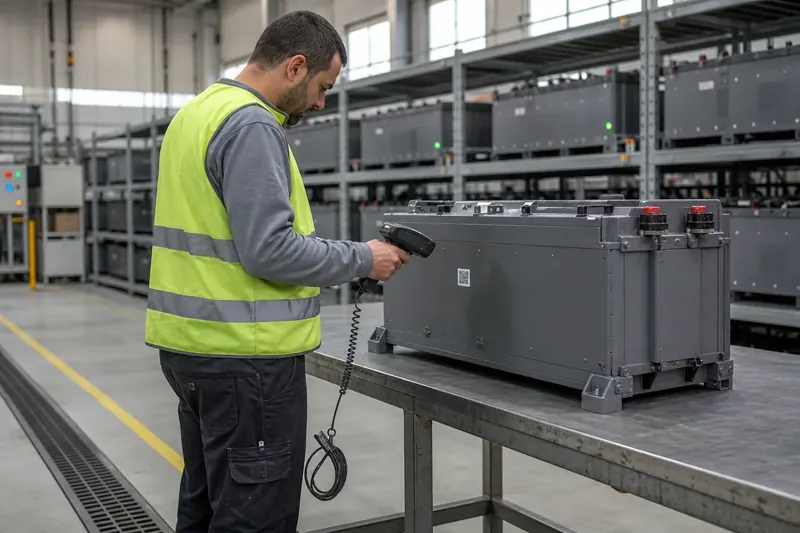
From 18 February 2027, every electric vehicle battery, every light means of transport battery and every industrial battery above 2 kWh must carry a digital battery passport once it is placed on the EU market. The basis is Regulation (EU) 2023/1542, which has applied since 17 August 2023 and needs no national transposition. The passport is a machine-readable record, bound to the individual battery through a QR code. A European Commission guidance document dated 21 August 2026 consolidates 71 data points per category and assigns each one a due date. Access is tiered: basic data such as manufacturer, capacity, carbon footprint, recycled content and due diligence is public, while sensitive data such as material composition and test reports is restricted to authorised third parties and authorities. The responsible party is the economic operator placing the battery on the market, meaning the manufacturer, importer or distributor. In Germany the Battery Act Implementation Law (BattDG) has governed enforcement since 7 October 2025, with fines up to 500,000 euros. The passport is only the start: recycled content must be disclosed from 18 August 2028, and binding minimum quotas apply from 2031. Set up the data logic early, and you are ready for the product passports that follow under the Ecodesign Regulation.
Why 18 February 2027 is a hard date
The battery passport is not a statement of intent. It is a directly applicable obligation under an EU regulation, and regulations bite the same way in all 27 member states. No national legislator can water them down or push them back.
That is the difference from a directive. Regulation (EU) 2023/1542 replaced the old 2006 Battery Directive on 17 August 2023 and has applied in stages since 18 February 2024. The battery passport obligation joins that list on 18 February 2027. Place a covered battery on the market without a passport after that date, and you are in breach of applicable law.
Three groups are covered: electric vehicle batteries, batteries for light means of transport such as e-bikes and e-scooters, and industrial batteries above 2 kWh. The passport attaches to the individual battery, not the model. And it has to stay current through use, second life and recycling. That is a lot more than a label at the point of sale.
What exactly goes into the battery passport
The battery passport is a structured, machine-readable record, tied to the battery through a QR code and a unique identifier. On 21 August 2026 the European Commission published guidance for it. The document lists 71 data points, assigns each a legal basis and flags whether it is mandatory, optional or only due later.

Roughly, the content sorts into three blocks:
- Master data: manufacturer, place and date of manufacture, batch or serial number, weight, capacity and chemistry. The basis for identifying a battery at all.
- Sustainability data: the carbon footprint per model and plant, the recycled content, the share of renewable materials, and the supply chain due diligence declaration. This is where the real work sits, because the data comes from a supply chain that is often long and international.
- Operating and conformity data: technical specifications, the EU declaration of conformity, collection and recycling instructions, and state-of-health and ageing parameters.
Much like the EU Data Act, the effort shifts away from the technology and toward sourcing the data. Generating the QR code is easy. Filling the 71 fields reliably is not.
Who sees which data: the tiered access rights
Not all data is visible to everyone. The regulation draws a deliberate line between public basics and protected detail. Consumers, authorities and recyclers each see exactly what they need, without trade secrets ending up in the open.
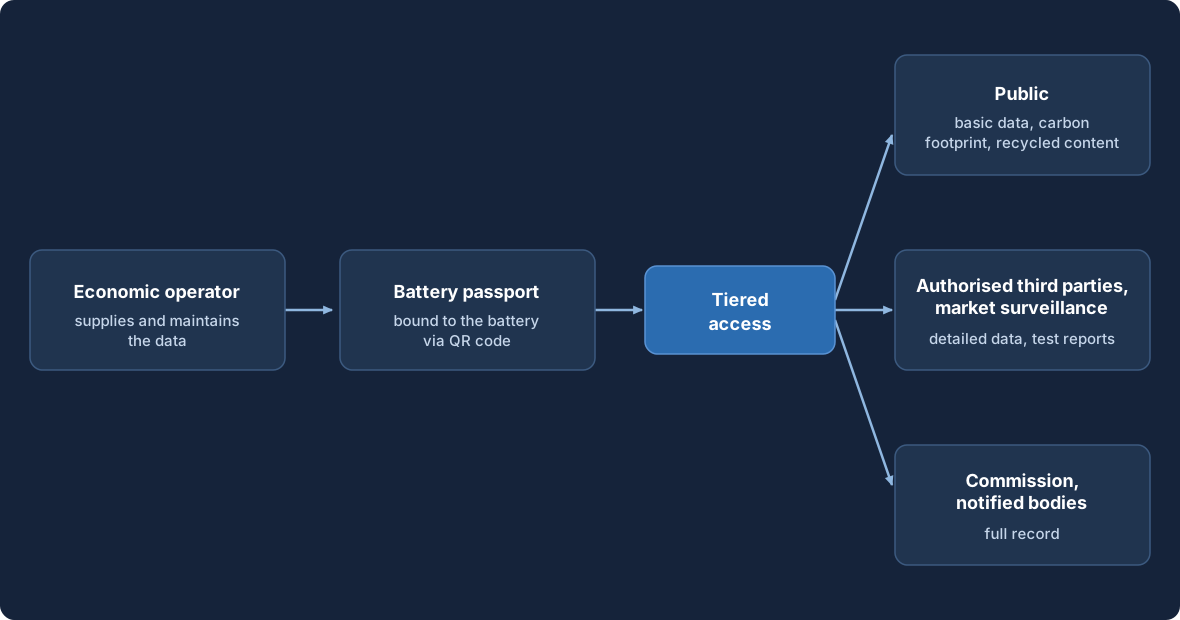
Public are the basics on model, capacity and chemistry, plus carbon footprint, recycled content, due diligence and recycling instructions. Anyone buying, inspecting or recycling a battery can reach these.
One tier down sits the data for authorised third parties and market surveillance: material composition, safety details, charging cycles, technical test reports. The full record goes only to the Commission and notified bodies, backed by an EU register and a web portal that manages the tiered access.
Responsibility, deadlines and penalties
Whoever places the battery on the market carries the responsibility. The manufacturer, importer or distributor is liable for the accuracy, completeness and currency of the data. The update duty can be handed off, but only in writing and only to an authorised third party.
German enforcement is already in place. The Battery Act Implementation Law (BattDG) took effect on 7 October 2025 and replaced the old Battery Act. It sets out responsibilities, market surveillance and penalties. Breaches of registration, reporting, conformity and due diligence obligations can cost up to 500,000 euros. Companies registered under the old law had to bring their registration in line by 15 January 2026.
The passport is only one of several obligations that phase in. Recycled content for cobalt, lead, lithium and nickel must be disclosed from 18 August 2028. Binding minimum quotas follow from August 2031, roughly 16 percent for cobalt and 6 percent each for lithium and nickel, and rise again from 2036. So the passport is where these proofs eventually come together.
The battery passport as a blueprint for the product passport
Batteries are just the start. The digital battery passport is the first mandatory example of a digital product passport, the kind the Ecodesign Regulation foresees for further product groups, from textiles to electronics. Get the data logic right here, and the next passports come easier.
Groundwork came from a consortium called Battery Pass, funded by the German economics ministry and led by Systemiq, with eleven partners across the battery and automotive value chain. It developed cross-industry content and technical standards so that no manufacturer has to reinvent the wheel. The carbon footprint, for instance, is expressed there in a single unit: kilograms of CO2 equivalent per kilowatt hour over the service life, per model and per plant.
The real hurdle stays the data sourcing. Raw material origin, carbon footprint, recycled content, all of it has to come up through the supply chain, often across several tiers and borders. Much like the data obligations for charging infrastructure, this is less an IT problem than a question of the clean processes behind it.
What companies should do now
Start step by step, along your own product and supply chain reality. The thing to settle early is which of the 71 data points are mandatory for your battery categories, and where the data even comes from. Four steps put a project into shape.

-
Check whether you are in scope
Work out which products fall under EV, LMT or industrial batteries above 2 kWh, and which data points are mandatory for exactly those categories from 2027. Not every battery in the portfolio is covered, but the wrong assumption costs time later.
-
Close the supply chain data gaps
Ask suppliers early for raw material origin, carbon footprint and recycled content. These values rarely come from inside your own house, and you cannot order them at short notice before the cutoff.
-
Set up machine-readable data storage
Store the passport data so it is machine-readable, updatable and ready for the tiered access rights. The passport lives across the whole lifecycle, so a one-off file will not do.
-
Settle responsibilities and contracts
Decide who maintains the passport, and put the transfer of the update duty in writing if a third party takes it on. That includes registration under the BattDG, otherwise enforcement bites at an avoidable point.
From 18 February 2027, every EV, LMT and industrial battery above 2 kWh needs a digital battery passport, bound to the individual battery through a QR code and kept current across the lifecycle. The passport itself is technology; sourcing the data from the supply chain is the work. Tackle that in a structured way now, and you meet not only the battery obligation but the next product passports too.
Further reading
Frequently asked questions
The digital battery passport is a structured, machine-readable record linked to a single battery through a QR code and a unique identifier. It exposes technical data and sustainability information across the whole lifecycle, from raw material origin through the carbon footprint to recycling instructions. The legal basis is the EU Battery Regulation (EU) 2023/1542.
The obligation applies from 18 February 2027. It covers every electric vehicle battery, every light means of transport battery such as e-bikes and e-scooters, and every industrial battery with a capacity above 2 kWh, once it is placed on the EU market or put into service. The passport is bound to the individual battery, not just to the model.
A European Commission guidance document dated 21 August 2026 consolidates 71 data points per battery category. Public fields include the manufacturer, capacity, chemistry, carbon footprint, recycled content and supply chain due diligence. Sensitive data such as material composition, charging cycles and test reports is restricted to authorised third parties and authorities.
The economic operator placing the battery on the market is responsible, meaning the manufacturer, importer or distributor. They are liable for the accuracy, completeness and currency of the data and must keep the passport up to date through use and recycling. The update duty can only be transferred in writing to an authorised third party.
In Germany the Battery Act Implementation Law (BattDG), in force since 7 October 2025, governs national enforcement. Breaches of registration, reporting, conformity and due diligence obligations can be fined up to 500,000 euros. The BattDG replaced the earlier German Battery Act.
Let's collaborate
One contact, a team behind it
Thirty minutes on what you're working on, whether grid, metering, market processes, IT architecture or AI. Afterwards you'll know how we'd approach it and who would sit at the table.
Energy and measurement technology since 2010 · innobu GmbH since 2014 · Based in Schleswig-Holstein, Germany
Whoever pitches also delivers: whoever leads the first call stays your contact right through to the steering committee, with established partners in the project. Direct: info@innobu.com