
MaBiS-Hub: Central Balancing Settlement for the Power Market, Start Date Open
That shifts roles, data flows and responsibility deep inside market communication.
The MaBiS-Hub bundles the aggregation of quarter-hourly metering data and the balancing settlement of power on a central, nationwide platform. The Bundesnetzagentur opened the procedure BK6-24-210 for it on 2 October 2024.
The MaBiS-Hub is a nationwide, centrally operated platform for aggregating quarter-hourly metering data and for the balancing settlement of power. Tasks that today sit decentrally at each distribution grid operator are being centralised. The Bundesnetzagentur opened the procedure BK6-24-210 on 2 October 2024, and one driver is the pseudonymised market communication under Section 52 (3) MsbG. The procedure is split into two blocks: Block 1 (BK6-24-210-1) governs central metering data processing and pseudonymisation, Block 2 (BK6-24-210-2) governs balancing and balancing settlement. The hub is expected to be operated by the four transmission grid operators as a consortium. One point on the timeline matters: the start date is open, because under notice no. 58 of 1 October 2026 the Bundesnetzagentur ruling is still pending. The BDEW introduction scenario has test systems at all market partners from 1 July 2028, parallel operation from 1 January 2029 and its end on 1 October 2029; the data protection end date is 2030. Under the same notice, new use cases from the hub will be expressed in EDIFACT, with no additional API web services. For the market roles a lot shifts: distribution grid operators lose responsibility for aggregation and settlement and mainly supply master data, while metering point operators connect directly to the hub. The new functional units are the metering data processor and the balancing and aggregation responsible party. Criticism comes from BDEW, VKU and edna: a single point of failure risk, a shifting of risk onto grid operators and a timeline rated as extremely demanding. Whoever secures data quality now, follows the procedures BK6-24-210-1 and -2 and builds the interface readiness avoids expensive parallel-operation stress.
What the MaBiS-Hub is
The MaBiS-Hub centralises balancing settlement for power. Instead of each distribution grid operator aggregating the settlement-relevant data itself, a nationwide platform will take over in future. The Bundesnetzagentur opened the procedure BK6-24-210 for it on 2 October 2024. Read correctly, the MaBiS-Hub is a platform and data topic with a multi-year migration programme, not a short-term format change.
In substance this is about the central aggregation of quarter-hourly market locations into total time series. One legal driver is Section 52 (3) MsbG, which requires pseudonymised market communication. The rebuild is closely tied to the smart meter rollout and the end of the standard load profile, with a balancing interval of 15 minutes. Operation is expected to sit with the four transmission grid operators. That shifts not just one task but the whole data architecture of balancing.
Central instead of decentral: the new architecture
The core is a shift from decentral, bilateral settlement to a central exchange, the same direction the HEDWIG reporting duty under § 111g EnWG takes for regulatory data. Today each grid operator communicates bilaterally via EDIFACT; in future aggregation and settlement run through the hub with a 1:1 connection for every market role. That cuts the number of connections sharply and makes the balancing data uniform across the country.
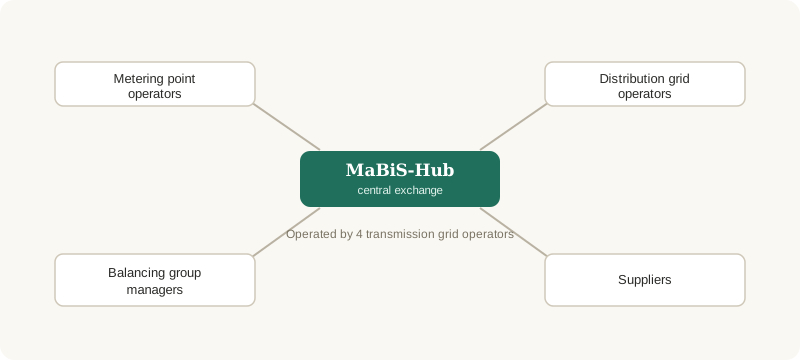
With the central platform, new functional units appear. The metering data processor (MWV) takes over the central processing of metering data, and the balancing and aggregation responsible party (BAV) takes over balancing. The connection is web service based with certificates instead of the former n:m communication. Instead of open market location IDs, pseudonymous codes run through the system, and the hub core is built modularly from aggregation, settlement and pseudonymisation.
For IT this means rebuilding the interfaces and the data logic at the same time. Whoever couples the web service based hub connection cleanly to the existing systems and provides for pseudonymisation in the data model can serve the central settlement without putting the running operation at risk. The format stays EDIFACT: under Bundesnetzagentur notice no. 58, no additional API web services are planned for the MaBiS hub, and new use cases will be expressed in EDIFACT. How market communication develops as a whole is covered in the piece on MaKo 2026 with EDIFACT, AS4 and API web services.
Two blocks and the timeline to 2029
The Bundesnetzagentur has split the procedure into two blocks to stage the complexity. The timeline is tight, and the final go-live is not yet legally binding. Whoever knows the sequence can plan migration and connection cleanly, rather than putting everything on one date.
| Date | Event | Content |
|---|---|---|
| 2 October 2024 | start of procedure BK6-24-210 | BNetzA Ruling Chamber 6 opens the procedure |
| Block 1 | BK6-24-210-1 | central metering data processing and pseudonymisation |
| Block 2 | BK6-24-210-2 | balancing and balancing settlement |
| 1 April 2028 | introduction scenario (BDEW) | identification of all market partners until 30 June 2028 |
| 1 July 2028 | test systems (BDEW) | test systems of all market partners and the hub ready, interface tests until 30 September 2028 |
| 1 January 2029 | parallel operation (BDEW) | ramp-up alongside the existing processes |
| 1 October 2029 | end of parallel operation (BDEW proposal) | only the new processes apply, data protection end date 2030 |
Where the dates come from matters, and the public debate often blurs it. Every date from 2028 onward comes from the BDEW introduction scenario, which the Bundesnetzagentur put out for consultation unchanged in procedure BK6-24-210-1. None of it is decided: notice no. 58 of 1 October 2026 calls the MaBiS hub ruling pending. The start date is open. The data protection end date under Section 52 (3) MsbG is 2030. Splitting the procedure into Block 1 and Block 2 decouples the consultation and the ruling for the two topics in time.
Who is affected: DSOs, MPOs, BGMs and suppliers
The change affects practically all market roles but shifts responsibility noticeably. Distribution grid operators lose their central aggregation role, and metering point operators deliver directly to the hub. Whoever knows their own role can prepare the right interfaces and data duties in a targeted way.

Distribution grid operators will mainly supply master data in future and lose responsibility for aggregation and settlement. Metering point operators connect directly to the hub, which raises the requirements for data quality and availability. Balancing group managers and suppliers receive faster, standardised settlement data on a quarter-hourly basis. Above all this stands one condition: the go-live presupposes nearly complete data quality, and in the BDEW introduction scenario the bar is set at nearly 100 percent.
Challenges and risks
Centralisation creates efficiency, but also new risks. An honest view has to name the concentration risk and the open governance questions, rather than selling the MaBiS-Hub only as an efficiency gain.
The central risk is a single point of failure: if the hub goes down, grid operators lack the daily aggregate data. How real this is was shown by a warning shot from live operation, because one transmission grid operator could not complete the balancing settlement on time for weeks in June 2025 due to software problems. On top of this comes the question of risk shifting: BDEW and VKU reject the idea that operating errors of the hub should be passed financially onto the grid operators. The deadline pressure is also considerable, and the BDEW itself rates the timeline as extremely demanding. edna and other associations flag open governance questions.
Watch the concentration risk: Whoever plans centralisation only as a cost advantage overlooks the flip side. A single platform bundles the balancing settlement for around 900 balancing groups. If it fails, grid operators lack the daily aggregate data, and without clear liability rules the consequences risk landing exactly with those who did not cause the error.
The MaBiS-Hub is not a pure IT project but also a governance question. As long as the sharing of liability for operating errors and the final go-live date are not fixed, grid operators and municipal utilities should actively follow the procedures BK6-24-210-1 and -2 through their associations. Clean data and stable interfaces are one half, clear rules for outages the other.
What companies should do now
The MaBiS-Hub is a multi-year programme, not a deadline project. Whoever secures data quality now and builds the interface readiness avoids expensive stress in the test and parallel operation that the BDEW scenario places in 2028 and 2029. A regulatory rebuild then becomes a stable foundation for the further digital work in balancing.

-
Follow the procedures actively and submit comments
Follow the procedures BK6-24-210-1 and -2 closely and submit comments through the associations. As long as governance, liability and the go-live date are not fixed, it pays to bring your own requirements into the consultation early, rather than accepting finished rules at the end.
-
Bring data quality to nearly 100 percent
Bring master, metering and location data to a nearly complete quality. Because the go-live presupposes very high data completeness, your own data base decides whether the connection to the hub runs smoothly or ends in clarification cases.
-
Prepare IT for hub communication
Prepare IT for the 1:1 hub communication and the quarter-hour logic. Web service based, certificate-backed interfaces and pseudonymisation in the data model should be tested early, so that live operation does not become the first stress test.
-
Budget for parallel operation and couple it
Budget for test and parallel operation, from July 2028 to October 2029 in the BDEW scenario, and couple both with the smart meter rollout. The same clean data base carries several duties and makes the investment valuable beyond a single go-live.
At heart the MaBiS-Hub is a platform and data topic with a regulatory clock. Whoever secures data quality, connects the hub interfaces early and follows the procedures actively keeps operation stable even during the migration. The same data base also carries the smart meter rollout and makes the investment valuable across several duties.
Deadline, market roles, systems
1 July 2028MaBiS hub: test systems of all market partners ready (BDEW scenario)Regulatory ruling · not yet adopted
Applicability: The dates are a BDEW proposal that the Federal Network Agency put out for consultation unchanged in procedure BK6-24-210-1. They are not binding: notice no. 58 of 1 October 2026 lists the MaBiS hub ruling as pending.
If the deadline is missed: No direct legal consequence There is no decision yet in proceeding BK6-24-210, and the date comes from the industry's introduction scenario. It only becomes binding and enforceable under Section 65 EnWG once a ruling sets it. Legal basis ↗
- Electricity grid operatoraffectedAdapts balancing and data exchange systems to the MaBiS hub interfaces.Typically affected: EDM / MDM, Market communication gateway (EDIFACT, AS4, API)
- SupplieraffectedMoves balancing group processes and data reconciliation to the central MaBiS hub.Typically affected: EDM / MDM, Market communication gateway (EDIFACT, AS4, API)
1 October 2029MaBiS hub: go-live (BDEW scenario)Regulatory ruling · not yet adopted
Applicability: The date is a BDEW proposal that the Federal Network Agency has put out for consultation in procedure BK6-24-210-1 but not adopted. Notice no. 58 of 1 October 2026 lists the MaBiS hub ruling as pending.
If the deadline is missed: No direct legal consequence The go-live date so far only appears in the industry's introduction scenario; there is no decision yet in proceeding BK6-24-210. Only a ruling would make the date binding and enforceable under Section 65 EnWG. Legal basis ↗
- Electricity grid operatoraffectedWorks with central balancing settlement in the MaBiS hub from go-live.Typically affected: EDM / MDM, Market communication gateway (EDIFACT, AS4, API)
- SupplieraffectedReceives balancing settlement and data reconciliation from the MaBiS hub from go-live.Typically affected: EDM / MDM
A classification for typical market roles, not a review of your individual case and not legal advice. Whether an obligation applies to your company (thresholds, exemptions) is for your legal department or counsel to confirm. The calendar doesn't replace your own deadline review. Information as of: 23 October 2026.
Further reading
Frequently asked questions
The MaBiS-Hub is a nationwide, centrally operated platform for aggregating quarter-hourly metering data and for the balancing settlement of power. Tasks that today sit decentrally at each distribution grid operator are being centralised. One legal driver is the pseudonymised market communication under Section 52 (3) MsbG. The BNetzA procedure BK6-24-210 sets out the details.
No start date has been set. The Bundesnetzagentur opened the procedure BK6-24-210 on 2 October 2024, and under notice no. 58 of 1 October 2026 the ruling is still pending. The BDEW introduction scenario, which the Bundesnetzagentur put out for consultation unchanged, has test systems at all market partners from 1 July 2028, parallel operation from 1 January 2029 and only the new processes from 1 October 2029. That is a proposal, not a decision. The data protection end date is 2030.
The hub is expected to be operated by the four transmission grid operators as a consortium. The exact governance, for example how liability for operating errors is shared, is still part of the procedure and of the comments from BDEW, VKU and edna.
Distribution grid operators lose responsibility for aggregation and settlement and will mainly supply master data to the hub. Metering point operators connect directly to the hub. The new functional units are the metering data processor and the balancing and aggregation responsible party. Balancing group managers and suppliers receive standardised settlement data on a quarter-hourly basis.
The Bundesnetzagentur has split the procedure into two blocks to stage the complexity. Block 1 (BK6-24-210-1) governs central metering data processing and pseudonymisation. Block 2 (BK6-24-210-2) governs balancing and balancing settlement. This decouples the consultation and the ruling for the two topics in time.
Let's collaborate
One contact, a team behind it
Thirty minutes on what you're working on, whether grid, metering, market processes, IT architecture or AI. Afterwards you'll know how we'd approach it and who would sit at the table.
Energy and measurement technology since 2010 · innobu GmbH since 2014 · Based in Schleswig-Holstein, Germany
Whoever pitches also delivers: whoever leads the first call stays your contact right through to the steering committee, with established partners in the project. Direct: info@innobu.com