WiM Gas 2.0: The Gas Metering Switch Processes from 1 October 2026
WiM Gas 2.0 is the first revision of the switch processes in gas metering since 2017. The application guide from BDEW, VKU, GEODE and FNB Gas was published on 4 August 2025 and applies from 1 October 2026, and the legal basis is the BNetzA ruling BK7-19-001. The focus is on metering point operation, not the supplier switch: termination, start and end of metering point operation, device change and meter-value transfer. This article explains what changes at the deadline, how the new gas metering device is connected to the electricity smart meter gateway, how WiM Gas is distinguished from GeLi Gas, what risks deadline pressure and data quality carry, and what gas suppliers, municipal utilities and metering point operators should do now.
WiM Gas 2.0 modernises the switch processes in gas metering from 1 October 2026. WiM stands for switch processes in metering and governs the electronic data exchange around metering point operation. It is the first revision since 2017 and the second major gas release of the year 2026. The application guide in version 2.0 was published on 4 August 2025 by a consortium of associations made up of BDEW, VKU, GEODE and FNB Gas, and the legal basis is the BNetzA ruling BK7-19-001 of Ruling Chamber 7. In substance it concerns metering point operation, not the supplier switch: termination, start and end of metering point operation, the obligation of the default metering point operator, device change, fault clearance and meter-value transfer with working-day deadlines, around ten working days as the maximum deadline. The central technical innovation is the connection of a new gas metering device to the electricity sector smart meter gateway. With this, gas metering point operation is for the first time coupled to the iMSys infrastructure of electricity, because in gas there is no separate iMSys obligation. What matters is the distinction from GeLi Gas 2.0, which reforms the supplier switch from 1 April 2026: WiM Gas 2.0 follows six months later and references GeLi only for cross-cutting topics such as data formats and deadlines. Critical are the tight gap to GeLi Gas 2.0, the data quality of the metering location as the main source of errors and the full load for small metering point operators and municipal utilities. Whoever attaches WiM Gas 2.0 to the GeLi Gas 2.0 programme, cleans up the metering-location data and plans the nME connection to the SMGW of electricity keeps the transition manageable.
What WiM Gas 2.0 means
WiM Gas 2.0 modernises the switch processes in gas metering from 1 October 2026. WiM stands for switch processes in metering and governs the electronic data exchange around metering point operation. It is the first revision since 2017 and the second major gas release of the year 2026. Read correctly, WiM Gas 2.0 is a metering reform with a hard deadline that attaches directly to the GeLi Gas 2.0 project.
Behind WiM Gas 2.0 stands a consortium of associations and a BNetzA ruling. The application guide is published by BDEW, VKU, GEODE and FNB Gas. The legal basis is the ruling BK7-19-001 of Ruling Chamber 7, which sets the framework, while the sector shapes the IT processes in the application guide. The focus is clearly on metering point operation, that is the question of who measures, and not on the supplier switch, that is the question of who sells the gas. With this, WiM Gas 2.0 brings the gas processes closer to the electricity world, in which switch processes in metering have been established for a long time.
What changes on 1 October 2026
At its core the metering processes are modernised and aligned with the electricity world. New or changed are, among others, the process for the end of metering point operation from the grid operator to the metering point operator, the meter-value transfer and the status logic of the values. Whoever knows the affected processes can plan the switch in a targeted way, rather than touching everything at once.

In concrete terms the reform affects the processes around metering point operation. It governs termination, start and end of metering point operation, the obligation of the default metering point operator, the device change and device takeover, as well as fault clearance in the metering location. On top of this comes the meter-value transfer, which in future runs on working-day deadlines, with around ten working days as the maximum deadline for transfer and its own status logic for the values. With this the procedures become leaner and more automated, oriented on the established electricity processes. For practice this means every former metering process must be checked against the new version of the application guide and followed through in the IT system.
Sector coupling: gas meter via the electricity smart meter gateway
The most important technical innovation links gas and electricity. A new gas metering device is connected for communication via the electricity sector smart meter gateway. The digital gas meter thereby uses the iMSys infrastructure of electricity, instead of building its own.
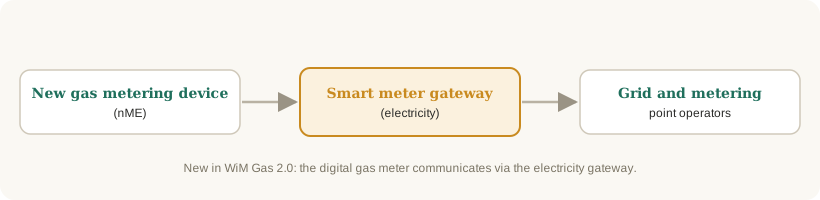
The background is that in gas there is no separate iMSys obligation. Instead of building a separate gateway infrastructure for gas, WiM Gas 2.0 connects the new gas metering device to the already existing electricity smart meter gateway. This creates a new interface between gas metering point operation and electricity iMSys, and with it a greater need for coordination. Whoever measures gas must in future align with the administration of the electricity gateway, for example when the gas metering point operator and the electricity gateway administration are in different hands. For municipal utilities that run both sectors, the coupling is often organisationally simpler, but it remains technically a new connection that must be planned cleanly.
WiM or GeLi? Metering, not supplier switch
The two gas releases of 2026 are easily confused, but they concern different things. GeLi governs the supplier switch, WiM the metering point operation. Whoever separates them plans the projects correctly.
For planning this means: GeLi Gas 2.0 is the reform of the supplier switch with a deadline of 1 April 2026, WiM Gas 2.0 the reform of metering point operation with a deadline of 1 October 2026. WiM references GeLi only for cross-cutting topics such as data formats and deadlines, rather than duplicating them. Whoever separates the two releases avoids duplicate assumptions and plans two consecutive, clearly distinct projects. The details of the supplier switch are in the innobu article on GeLi Gas 2.0 , which covers the operational reform of the supplier switch on its own.
Challenges and risks
The deadline pressure is high and data quality is decisive. Only six months after GeLi Gas 2.0 metering has to follow, and poor metering-location data generates clarification cases. An honest view has to name this, rather than painting WiM Gas 2.0 only as an orderly modernisation.
The gap to GeLi Gas 2.0 is only six months, which leaves teams little room, especially as many of the same specialists handle both projects. The main source of errors is the data quality of the metering location: if the ID, address or meter number is wrong, clarification cases arise that must be resolved manually. On top of this comes the cross-sector complexity from the connection to the electricity smart meter gateway, which requires a new interface and new coordination. Small metering point operators and municipal utilities in particular bear the full load at lower scale, because they have to implement the same range of functions as large market participants.
Watch data quality and deadline pressure: Faulty metering-location data, above all in ID, address and meter number, is the most common cause of clarification cases and costs time at the deadline. Whoever does not clean up the master data in good time and treats WiM Gas 2.0 as a standalone project only six months after GeLi Gas 2.0 risks bottlenecks, especially with smaller metering point operators and municipal utilities.
WiM Gas 2.0 is not a mere format update but brings three real risks: the tight gap of six months to GeLi Gas 2.0, the data quality of the metering location as the main source of errors and the additional complexity of the connection to the electricity smart meter gateway. Whoever cleans up the metering-location data early, bundles both gas releases in one programme and plans the sector coupling cleanly keeps the transition manageable, especially also for small metering point operators.
What companies should do now
WiM Gas 2.0 belongs in the same programme as GeLi Gas 2.0, not in a standalone project. Whoever cleans up the metering-location data and agrees delivery dates with the software provider avoids bottlenecks. A regulatory mandatory deadline then becomes an orderly step.

-
Attach WiM Gas 2.0 to the GeLi Gas 2.0 project
Attach WiM Gas 2.0 directly to the running GeLi Gas 2.0 project, rather than setting up a standalone project. Both releases share cross-cutting topics such as data formats and deadlines, and the same plan avoids duplicate assumptions and relieves the already scarce teams.
-
Agree the delivery with the software provider
Agree the WiM Gas 2.0 delivery firmly with the software provider, above all the delivery date of the releases. Only with a fixed date can internal tests and commissioning be planned so that they are completed before 1 October 2026.
-
Clean up the master data of the metering locations
Clean up the master data of the metering locations, above all ID, address and meter number. Clean data is the most effective safeguard against clarification cases that would have to be resolved manually at the deadline and burden the teams in the field and in the back office.
-
Set up deadline monitoring and plan the nME connection
Set up deadline monitoring on a working-day basis that keeps the maximum deadlines for meter-value transfer in view, and plan the connection of the new gas metering device to the electricity smart meter gateway. This way both the deadlines and the new sector coupling are secured in good time.
At heart WiM Gas 2.0 is a metering project with a hard rhythm that belongs in the same programme as GeLi Gas 2.0. Whoever agrees the delivery with the software provider, cleans up the metering-location data and plans the nME connection to the electricity smart meter gateway avoids bottlenecks at 1 October 2026. Whoever wants to go deeper into the supplier switch in gas sets WiM Gas 2.0 alongside the GeLi Gas 2.0 supplier switch from 1 April 2026 and recognises the deliberate differences.
Further reading
Frequently asked questions
WiM Gas 2.0 modernises the switch processes in gas metering from 1 October 2026. WiM stands for switch processes in metering and governs the electronic data exchange around metering point operation, that is termination, start and end of metering point operation, device change, fault clearance and meter-value transfer. It is the first revision since 2017 and the second major gas release of the year 2026. The application guide is published by BDEW, VKU, GEODE and FNB Gas, and the legal basis is the BNetzA ruling BK7-19-001.
WiM Gas 2.0 applies from 1 October 2026. The associated application guide in version 2.0 was already published on 4 August 2025, so metering point operators and their software providers had around fourteen months of lead time. The deadline falls six months after GeLi Gas 2.0, which reforms the supplier switch from 1 April 2026.
GeLi Gas 2.0 governs the supplier switch, that is who sells the gas, and applies from 1 April 2026. WiM Gas 2.0 governs metering point operation, that is who measures, and applies from 1 October 2026. This includes termination, start and end of metering point operation, device change and meter-value transfer. WiM references GeLi only for cross-cutting topics such as data formats and deadlines, rather than duplicating them. Whoever separates the two releases plans the projects correctly.
The most important technical innovation of WiM Gas 2.0 links gas and electricity. A new gas metering device is connected for communication via the electricity sector smart meter gateway. In gas there is no separate iMSys obligation, so the digital gas meter uses the existing iMSys infrastructure of electricity. This creates a new interface between gas metering point operation and electricity iMSys, along with greater coordination between the gas metering point operator and the administration of the electricity gateway.
WiM Gas 2.0 belongs in the same programme as GeLi Gas 2.0, not in a standalone project. Metering point operators should attach WiM Gas 2.0 directly to the GeLi Gas 2.0 project, agree the WiM Gas 2.0 delivery and the delivery dates firmly with the software provider, clean up the master data of the metering locations, above all ID, address and meter number, and set up working-day deadline monitoring and plan the connection of the new gas metering device to the electricity smart meter gateway.