GeLi Gas 2.0: New Gas Supplier-Switching Processes from 1 April 2026
GeLi Gas 2.0 modernises the gas supplier-switching business processes from 1 April 2026. The legal basis is the procedure BK7-19-001 of BNetzA Ruling Chamber 7. This article explains what GeLi Gas 2.0 really means, what changes in concrete terms for identification logic, meter-value handover and interfaces, how 2.0 is cleanly distinguished from GeLi Gas 3.0, why the release pile-up of AS4, GeLi Gas 2.0 and WiM 2.0 gas is the real risk, and how gas suppliers, municipal utilities and grid operators can prepare without putting the running operation at risk.
GeLi Gas 2.0 is the next major revision of the gas supplier-switching business processes, that is the market processes and data formats for switching the gas supplier that the Bundesnetzagentur prescribes as binding. The process changes apply from 1 April 2026, and the legal basis is the procedure BK7-19-001 of Ruling Chamber 7. The joint application guide from BDEW, VKU, GEODE and FNB Gas appeared on 28 February 2025, and the introduction scenario carries the status of 2 March 2026. In substance GeLi Gas 2.0 brings the gas processes closer to the power logic: a new identification logic for the market location in UTILMD Gas, a mandatory meter-value handover at a mid-year switch and the connection of intelligent metering systems. A web API to retrieve the market location ID, however, deliberately does not exist in gas. The distinction from GeLi Gas 3.0 matters: GeLi Gas 3.0 transfers the GasNZV rules into a BNetzA ruling after the CJEU judgment C-718/18, without new processes or formats. The real risk is the release pile-up: AS4 has been mandatory in gas since 1 April 2025, but only around 50 percent was migrated by the deadline, WiM 2.0 gas follows on 1 October 2026, plus the GasNZV transfer and the politically demanded 24-hour switch, which is seen as barely feasible technically. Whoever stabilises AS4 now, prioritises GeLi Gas 2.0 with the initial transmission and consolidates the release calendar avoids expensive duplicate work.
What GeLi Gas 2.0 means
GeLi Gas 2.0 modernises the supplier-switching processes in the gas market from 1 April 2026. The gas supplier-switching business processes have been the binding basis for switching the provider since 2008, and now the BNetzA ruling BK7-19-001 brings the next major revision. Read correctly, GeLi Gas 2.0 is a process and IT topic, not a pure formality.
In substance GeLi Gas 2.0 brings the gas processes closer to the established power logic. The joint application guide from BDEW, VKU, GEODE and FNB Gas was published on 28 February 2025, and the introduction scenario carries the status of 2 March 2026. New are the identification logic for the market location in UTILMD Gas, the mandatory meter-value handover at a switch and the connection of intelligent metering systems. Unlike in power, gas deliberately does without a web API to retrieve the market location ID, and GeLi Gas 2.0 expressly does not bring a 24-hour switch.
What changes on 1 April 2026
The core of GeLi Gas 2.0 is a modernised process and data logic. Instead of pure format maintenance, this is about new identification rules, more meter values in the switching process and the connection of intelligent metering systems. Whoever knows the individual building blocks can prioritise the change in a targeted way, rather than touching everything at once.

The most important substantive change is the new identification logic for the market location in UTILMD Gas, which makes the switching process more unambiguous. On top of this comes the mandatory transmission of selected meter values at a mid-year switch, so that billing and balancing can build on clean data. With the connection of intelligent metering systems, the finer meter-value logic also enters the gas market. Unlike in power, however, there is no web API to retrieve the market location ID, and market communication stays message based. In practice the initial transmission of the communication data matters, which is to take place in the window from 1 to 17 April 2026 and thus sets a hard deadline right at the start. The wider format rebuild of market communication runs in parallel through the MaKo 2026 move from EDIFACT to API as its own programme.
GeLi Gas 2.0 and 3.0: the difference
The version numbers cause confusion, but they are clearly separable. GeLi Gas 2.0 is the substantive reform, GeLi Gas 3.0 the purely legal rescue of the GasNZV rules. Whoever confuses the two plans duplicate IT projects without reason.
For planning this means: GeLi Gas 2.0 is the real project with new processes, formats and a hard deadline on which IT, processes and tests depend. GeLi Gas 3.0, by contrast, is a legal-technical transfer. After the CJEU judgment C-718/18 the rules of the GasNZV, which expires on 31 December 2025, move into a BNetzA ruling, without changing anything substantive in the market processes. Whoever treats 3.0 as content-neutral and concentrates the resources on 2.0 avoids a superfluous parallel project.
The gas release pile-up
GeLi Gas 2.0 does not come alone. Several gas projects follow in quick succession, and exactly this clustering is the real risk. A consolidated release calendar matters more than any single project.
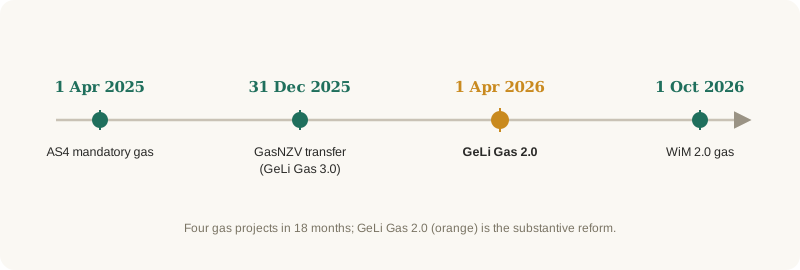
| Date | Project | Content |
|---|---|---|
| 1 April 2025 | AS4 mandatory for gas | AS4 as the mandatory transport standard in gas market communication |
| end of 2025 | GasNZV transfer, GeLi Gas 3.0 | legal-technical transfer of the GasNZV without new formats |
| 1 April 2026 | GeLi Gas 2.0 | new supplier-switching processes, identification logic and meter-value handover |
| 1 October 2026 | WiM 2.0 gas | revised processes in gas metering |
The dates show why the gas market is under pressure. AS4 in April 2025 was only the prelude, GeLi Gas 2.0 and WiM 2.0 gas follow within about 18 months, plus the GasNZV transfer. For resource-thin municipal utilities this means four to five releases almost in series. A shared release calendar that makes dependencies and test phases visible across all market roles is therefore more valuable than the isolated planning of each single project.
Challenges and risks
The deadline pressure meets real IT backlogs. The AS4 migration already ran slowly, and the planned 24-hour switch for gas is seen in the sector as barely feasible. An honest view has to name this, rather than painting GeLi Gas 2.0 only as a routine format change.
The biggest risk does not lie in GeLi Gas 2.0 itself but in the interplay of the releases. AS4 was only around 50 percent migrated by the deadline, and many market partners lacked the necessary certificates. When a foundation like AS4 wobbles, the processes of GeLi Gas 2.0 that build on it are put at risk. On top of this, coordinated test phases across all market roles take months and barely fit into the tight schedule. The politically demanded 24-hour switch for gas with a target date of 1 January 2026 is seen by many in the sector as technically unrealistic, precisely because GeLi Gas 2.0 deliberately does not provide for it.
Watch the release pile-up: Whoever plans GeLi Gas 2.0 in isolation overlooks the real danger. AS4 was only around 50 percent migrated by the deadline, and WiM 2.0 gas follows immediately after. If one step breaks, the following ones tip with it. A 24-hour switch for gas cannot seriously be promised on this basis.
GeLi Gas 2.0 is not an isolated project but one link in a chain of tightly scheduled gas releases. Whoever stabilises AS4 first, then prioritises GeLi Gas 2.0 and coordinates the releases in a shared calendar keeps the operation stable. Realistic expectations on the 24-hour switch are part of honest planning.
What companies should do now
GeLi Gas 2.0 is a programme, not a single deadline. Whoever stabilises AS4, prioritises the process changes and consolidates the release calendar avoids expensive duplicate work. A regulatory mandatory release then becomes an orderly step in the digitalisation of the gas processes.

-
Stabilise AS4 connectivity and certificates
First bring the AS4 connection and the certificates into a stable state. Because only around 50 percent of AS4 was migrated by the deadline, a reliable transport foundation is the precondition for the processes of GeLi Gas 2.0 to run cleanly at all.
-
Prioritise GeLi Gas 2.0 and the initial transmission
Prioritise GeLi Gas 2.0 with a clear focus on the initial transmission of the communication data in the window from 1 to 17 April 2026. This deadline sets a hard marker right at the start, and whoever misses it or arrives with weak master data quality risks clarification cases in the very first weeks.
-
Bundle the release calendar
Bring AS4, GeLi Gas 2.0, WiM 2.0 gas and the GasNZV transfer together in a shared release calendar. Only when dependencies and test phases are visible across all market roles can the tight schedule be managed at all with scarce resources.
-
Treat GeLi Gas 3.0 as content-neutral
Treat GeLi Gas 3.0 as a legal-technical transfer without new formats and watch the 24-hour switch for gas, without rushing it. That keeps the resources where genuinely new processes arise, namely with GeLi Gas 2.0.
At heart GeLi Gas 2.0 is a process and IT topic with a regulatory clock. Whoever stabilises AS4, prioritises GeLi Gas 2.0 and coordinates the releases keeps the operation stable even during the pile-up. Whoever wants to understand the gas supplier switch sets it alongside the 24h supplier switch (LFW24) in power and recognises the deliberate differences.
Further reading
Frequently asked questions
GeLi Gas stands for Geschäftsprozesse Lieferantenwechsel Gas, the gas supplier-switching business processes, that is the market processes and data formats for switching the gas supplier that the Bundesnetzagentur prescribes as binding. GeLi Gas 2.0 is the next major revision of these processes. The legal basis is the procedure BK7-19-001 of BNetzA Ruling Chamber 7. In substance GeLi Gas 2.0 brings the gas processes closer to the power logic, for example through a new identification logic for the market location in UTILMD Gas.
The process changes of GeLi Gas 2.0 apply from 1 April 2026. The joint application guide from BDEW, VKU, GEODE and FNB Gas was published on 28 February 2025, and the introduction scenario carries the status of 2 March 2026. The initial transmission of the communication data is planned for the window from 1 to 17 April 2026.
GeLi Gas 2.0 is the substantive process and format reform from 1 April 2026 with new processes and new data formats. GeLi Gas 3.0 is something different, namely the legal-technical transfer of the GasNZV rules into a BNetzA ruling after the CJEU judgment C-718/18, without new processes or formats. The background is that the GasNZV expires on 31 December 2025. Whoever confuses the two plans duplicate IT projects without reason.
No. GeLi Gas 2.0 does bring the gas processes closer to the power logic, but it deliberately does not provide for a 24-hour switch. The politically demanded 24-hour switch for gas with a target date of 1 January 2026 is widely seen in the sector as barely feasible technically. Unlike in power, gas also has no web API to retrieve the market location ID.
Gas suppliers should first stabilise the AS4 connectivity and the certificates, because only around 50 percent of AS4 was migrated by the deadline. After that the task is to prioritise GeLi Gas 2.0, above all the initial transmission of the communication data in April 2026. It also makes sense to bundle the release calendar of AS4, GeLi Gas 2.0, WiM 2.0 gas and the GasNZV transfer and to treat GeLi Gas 3.0 as content-neutral.