Solar Peak Law 2025: what applies to new PV systems from 2 kWp
This is an analysis of the PV-specific revenue and feed-in rules of the Solarspitzengesetz, the solar peak law, and what they mean for operators and installers. The law pulls three levers in the EEG: no payment at negative prices, the 60 percent feed-in cap without a smart metering system, and a funding-period extension that gives the forgone hours back. The neighbouring topics sit close by. The metering-price side of the same amending act is covered in the article on the MsbG amendment and price caps, and the technical control side in the piece on the control box and section 14a. This article stays on the PV operator and what changes for a new system. Note: iMSys = smart metering system (intelligentes Messsystem), EEG = Renewable Energy Sources Act.
The solar peak law, formally an act amending energy industry law to avoid temporary generation surpluses, has been in force since 25 February 2025 and changes the EEG and the EnWG. It pulls three levers that all apply to new PV systems from 2 kW, not from 7 kW. Under section 51 EEG, new systems from 2 kW no longer receive feed-in payment at negative exchange prices, from the very first negative quarter-hour, effective once a smart metering system is fitted. Under section 9 EEG, new systems above 2 to 100 kW without a smart metering system and control device may only feed in 60 percent of their installed capacity until the smart metering system with a control box is fitted and the remote control has been tested. The duties are staggered: 2 to under 7 kW smart metering system on request, from 7 kW mandatory installation, from 25 kW remote controllability, from 100 kW actual and target transmission via a remote control unit. Under section 51a EEG the forgone payment hours are not lost but appended to the end of the 20-year period, with negative quarter-hours weighted by factor 0.5 for solar systems. Only new systems commissioned from 25 February 2025 are affected, existing systems do not have to curtail, and a voluntary switch brings a surcharge of around 0.6 ct/kWh. Balcony plants, direct marketing and zero-feed-in systems are exempt. The real yield loss from the cap is small, around 9 percent for a south-facing system and only 1.1 percent for east-west, and a battery with self-consumption makes the cap the smaller problem. The number of negative exchange-price hours climbed to a record of around 573 in 2025. Operators should order the smart metering system early, plan battery storage and forecast-based energy management, maximise self-consumption and, for larger systems, check direct marketing.
What the solar peak law regulates
The Solarspitzengesetz, the solar peak law, reacts to feed-in peaks at times when electricity at the exchange is worth nothing or less than nothing. Its formal name is an act amending energy industry law to avoid temporary generation surpluses, and it changes both the EEG and the EnWG. It has been in force since 25 February 2025, published in the Federal Law Gazette as BGBl. 2025 I No. 51. The aim is fewer generation surpluses at midday and more grid-friendly behaviour from photovoltaic systems.
The law pulls three levers, and all three apply to new PV systems from 2 kW. The first is the loss of payment at negative prices. The second is the 60 percent feed-in cap for systems without a smart metering system. The third is a funding-period extension that hands the forgone hours back at the end. Around these levers sits a staggered duty of controllability that depends on system size.
- In force since 25 February 2025: changes the EEG and the EnWG, published as BGBl. 2025 I No. 51.
- Three levers: no payment at negative prices, 60 percent cap, staggered controllability.
- Central threshold is 2 kW: not 7 kW, which is only the mandatory smart-metering-system limit.
- Goal: fewer generation surpluses and more grid-friendly behaviour.
The key point to fix early is the threshold. The headline figure people remember is often 7 kW, but the obligations that change a new system's economics, the 60 percent cap and the loss of payment at negative prices, start at 2 kW. The 7 kW mark is something else: the size from which the metering point operator must fit a smart metering system. Confusing the two leads to the wrong planning, so the rest of this article builds on 2 kW and treats 7, 25 and 100 kW as the further steps.
No payment at negative prices
When electricity at the exchange is worth nothing, there is no funding for it either. That principle existed before, but the solar peak law makes it bite harder. New PV systems from 2 kW no longer receive any feed-in payment for the hours in which the exchange price is negative.
The legal basis is section 51 EEG. The cut applies from the very first negative quarter-hour, not after a grace period of several hours as under the older rule. It becomes effective for a given system only once a smart metering system has been fitted, since the device is needed to record the relevant quarter-hourly values. Until then the practical effect runs through the 60 percent cap instead, which the next section covers.
- From 2 kW: no feed-in payment for new systems during negative exchange prices.
- From the first negative quarter-hour: the basis is section 51 EEG.
- Effective once fitted: the rule applies after a smart metering system is installed.
- Negative hours rising: 457 in 2024, around 573 in 2025, a record.
The reason the rule matters more each year is that negative exchange prices are becoming common. In 2024 there were 457 hours with a negative price, and in 2025 the figure rose to around 573, a record. With roughly 117 GW of installed PV capacity in Germany feeding in at the same midday hours, the surpluses that drive prices below zero will not disappear on their own, which is exactly the behaviour the law is trying to dampen.
The 60 percent feed-in cap
Without a smart metering system the feed-in is capped. The number sounds severe, but the real yield loss is much smaller than the headline suggests, and the cap is temporary by design.

New systems above 2 to 100 kW without a smart metering system and control device may feed in only 60 percent of their installed capacity. The legal basis is section 9(2) EEG. The cap is not permanent: it falls away as soon as the smart metering system with control box is fitted and the remote control has been tested. Which path that remote control runs through is now a security question around Chinese inverters. In other words it is a placeholder that holds back the midday peak until the technical controllability is in place, after which the system can feed in fully again, subject only to the negative-price rule.
- Systems above 2 to 100 kW: feed in only 60 percent without a smart metering system, under section 9 EEG.
- Cap is temporary: it falls away once the smart metering system and control box are fitted and tested.
- Real yield loss small: around 9 percent for a south-facing system, 1.1 percent for east-west.
- Order early: whoever requests the smart metering system early lifts the cap quickly.
The 60 percent figure refers to capacity, not to annual yield. The cap only bites in the few hours when a system would otherwise produce close to its rated output, the bright midday peaks. Across a year the real loss is therefore modest: around 9 percent for a south-facing system that concentrates its output at noon, and only around 1.1 percent for an east-west layout that spreads its generation across the morning and afternoon. The clear practical conclusion is to order the smart metering system from the metering point operator early, because that is what lifts the cap altogether.
The thresholds: 2, 7, 25 and 100 kW
What exactly applies depends on the size of the system. Four steps decide how it is metered and how far it must be controllable, and reading them off the system's capacity avoids most of the confusion around the law.
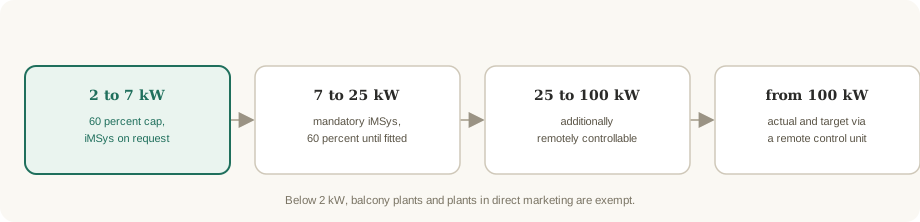
The smallest band runs from 2 to under 7 kW. Here the 60 percent cap applies, and a smart metering system is fitted only on request, not by default. From 7 to under 25 kW the metering point operator must fit the smart metering system, and until it is installed the 60 percent cap holds. From 25 to under 100 kW the system must additionally be remotely controllable, so that feed-in can be reduced from outside when the grid needs it. From 100 kW upward the system must transmit both actual and target values via a remote control unit, the same logic that applies to larger generators.
- 2 to under 7 kW: 60 percent cap, smart metering system only on request.
- 7 to under 25 kW: mandatory smart metering system, 60 percent until fitted.
- 25 to under 100 kW: additionally remotely controllable.
- From 100 kW: actual and target transmission via a remote control unit.
The staircase explains why the 2 kW and 7 kW figures are so easy to mix up. The duties begin at 2 kW, but the obligation on the metering point operator to actually fit the device begins at 7 kW. A 5 kW rooftop system therefore lives under the cap and the negative-price rule from day one, yet only gets a smart metering system if the operator asks for one, which, given that the device is what lifts the cap, is usually the sensible move. The technical side of the controllability, the control box and section 14a, is covered in the article on the control box and section 14a.
Funding-period extension, existing systems and exemptions
The payment hours that fall away at negative prices are not lost. They are appended to the end of the funding period, and the existing fleet stays protected, which softens the new regime considerably.
The mechanism sits in section 51a EEG. Each negative quarter-hour in which a system received no payment is recorded and made up at the end of the 20-year funding period, so the system keeps the same number of paid hours overall, just later. For solar systems the negative quarter-hours are weighted by factor 0.5, so two forgone quarter-hours buy back one quarter-hour of funding at the end. The funding clock effectively pauses during negative prices rather than running out.
- Hours not lost: negative quarter-hours are appended at the end of the 20-year period under section 51a EEG.
- Factor 0.5 for solar: the negative quarter-hours are weighted at half when they are made up.
- Existing systems protected: they do not have to curtail, a voluntary switch brings around 0.6 ct/kWh.
- Exemptions: balcony plants, direct marketing and zero-feed-in systems.
The new rules apply only to systems commissioned from 25 February 2025. Existing systems do not have to curtail and keep their previous terms; an operator may switch voluntarily into the new regime, which brings a surcharge of around 0.6 ct/kWh, but is not obliged to. Three groups are exempt outright: plug-in solar devices, the balcony plants, are out, as are systems in direct marketing and zero-feed-in systems that never export to the grid. In direct marketing the 60 percent cap does not apply anyway, which is one reason larger systems often choose that route. The metering-price side of the same amending act, which governs what a smart metering system may cost, is set out in the article on the MsbG amendment and price caps.
What operators should do now
Whoever thinks the smart metering system, self-consumption and storage together loses almost nothing and gains flexibility. For most new systems the cap is the smaller problem, and the right response turns the new rules into a manageable planning task rather than a threat.

The single most effective move is to order the smart metering system with control box from the metering point operator early, because that lifts the cap and clears the path to full feed-in. From there, battery storage and forecast-based energy management let the system use its midday peak in the evening instead of giving it away. Maximising self-consumption is the economically strongest lever of all, since every self-used kilowatt-hour avoids both the cap and the loss of payment at negative prices. For larger systems, direct marketing is worth checking, because it removes the 60 percent cap entirely. The direct-marketing route and its remote control are covered in the article on direct marketing and remote control, and the smart metering system itself in the piece on the next-generation smart meter gateway.
- Order the smart metering system early. Request the smart metering system with control box from the metering point operator so the 60 percent cap is lifted quickly.
- Plan battery storage and forecast-based management. Use the midday peak later instead of giving it away, and shift load to negative-price hours.
- Maximise self-consumption. Every self-used kilowatt-hour avoids the cap and the loss of payment, the strongest economic lever.
- Check direct marketing for larger systems. In direct marketing the 60 percent cap does not apply, which can pay off above a certain size.
Further reading
Frequently asked questions
No. The new rules only apply to PV systems commissioned from 25 February 2025. Existing systems do not have to curtail and keep their previous payment terms. Operators of existing systems may switch voluntarily into the new regime, which brings a surcharge of around 0.6 ct/kWh, but they are not obliged to.
Much smaller than the headline figure suggests. The 60 percent cap only bites in a few hours of bright midday peaks. The real annual yield loss is around 9 percent for a south-facing system and only around 1.1 percent for an east-west layout. As soon as the smart metering system with control box is fitted and tested, the cap falls away entirely.
A battery makes the cap and the loss of payment at negative prices a minor problem. Energy that cannot be fed in at midday is stored and used in the evening, which raises self-consumption, the economically strongest lever. Together with forecast-based energy management the system shifts its peaks instead of giving them away.
From 7 kW the metering point operator must fit a smart metering system. Below 7 kW, from 2 kW, it is only fitted on request. The 60 percent feed-in cap nonetheless applies to all new systems from 2 to 100 kW until a smart metering system with control box is installed and the remote control has been tested.
No. Balcony plants, formally plug-in solar devices, are exempt, as are systems below 2 kW. Systems in direct marketing and zero-feed-in systems are also exempt: in direct marketing the 60 percent cap does not apply anyway. The new obligations target new feed-in systems from 2 kW that are not in direct marketing.