Green ammonia import via Brunsbüttel: the terminal and the digital supply-chain proofs
This is a practical analysis of green ammonia as the leading hydrogen import carrier, the Brunsbüttel ammonia import terminal as the physical import gateway, with the Yara terminal in operation and an RWE terminal plus a cracker planned, and the digital supply-chain proofs that document and trace the sustainability of imported molecules. It is not a treatise on import funding or on RFNBO certification mechanics. It sets out why hydrogen is imported as ammonia, how the Yara and RWE terminals work, what cracking versus direct use means, what an imported volume has to carry as proof, and how the EU Union Database and the platform and blockchain tools secure the chain. The neighbouring topics, import funding through H2Global and the RFNBO certification mechanics, sit close by and are linked, not repeated.
Ammonia is the leading hydrogen import carrier because it has the highest volumetric hydrogen density among the market-ready carriers, at about 105 to 121 kg H2/m3, well ahead of liquid hydrogen at about 71 and LOHC at about 54; it ships liquefied at about minus 33 C and ambient pressure on the existing fleet, with established tanks and a decades-old world trade, and it is usable directly or cracked back into hydrogen. Per the IEA it is the cheapest transport option across most distance and volume combinations, even including reconversion. Brunsbüttel is the central German node, and there are two separate projects there. The Yara Clean Ammonia terminal has been in operation since 2 October 2024, with up to 3 million tonnes of ammonia per year, about 530,000 t of hydrogen or about 5 percent of the EU 2030 hydrogen target; Yara is the world's largest ammonia trader and has been on the site for about 50 years. The RWE terminal is separate and planned: from 2026 about 300,000 t per year, scalable to up to 2 million t, with an industrial cracker plus a dedicated hydrogen pipeline in phase two. The floating ammonia cracker by Höegh Evi and Deutsche ReGas is at Lubmin on the Baltic, not Brunsbüttel. The core digital proof is the Proof of Sustainability, a digital producer declaration that under RED III is physically tied to the molecule through mass balance, with no book-and-claim, travelling along production, ship, terminal and off-taker, and booked into the EU Union Database as the central ledger against double counting. Platform and blockchain tools secure the flow, including the H2Global blockchain policy brief, GreenToken by SAP, the Siemens Energy Clean Energy Certification and an ISCC pilot with Circularise, but they do not replace audits or the Union Database. RFNBO certification is the precondition behind all of this, covered in a separate article. Brunsbüttel itself is an energy hub on the North Sea and the Kiel Canal, also home to LNG facilities.
Why hydrogen is imported as ammonia
Germany will have to import a large share of its hydrogen, and the question is not whether but in what form it arrives. The answer, for the foreseeable bulk of the volumes, is green ammonia rather than pure hydrogen. The reason is physical: among the market-ready carriers, ammonia packs the most hydrogen into the least space, and it does so using ships, tanks and trading relationships that already exist. That combination of density and existing logistics is what makes ammonia the leading import carrier, well ahead of the alternatives that are still building out their infrastructure.
The density numbers set the case out plainly. Liquid ammonia holds about 105 to 121 kg of hydrogen per cubic metre, the highest volumetric hydrogen density of any market-ready carrier, clearly ahead of liquid hydrogen at about 71 kg/m3 and LOHC at about 54 kg/m3. More hydrogen per cubic metre means fewer ship movements for the same delivered energy, which is the single largest lever on the cost of long-distance transport. Ammonia also ships liquefied at about minus 33 C at ambient pressure, which the existing carrier fleet and established shore tanks already handle, rather than the deep cryogenics that liquid hydrogen demands.
Behind the molecule sits a world trade that has worked for decades. Ammonia is already moved at scale for fertiliser and industry, with an established carrier fleet, proven tanks and a global market, so the import path does not have to invent its logistics from scratch. It is also doubly usable: ammonia can be used directly, in industry, as a fertiliser precursor or as a marine fuel, or it can be cracked back into hydrogen at the point of use. That optionality, a carrier that is itself a saleable product, is a structural advantage that the other carriers do not share.
The economics confirm the choice. IEA analysis finds ammonia to be the cheapest transport option across most distance and volume combinations, even when the cost of reconverting it back into hydrogen is included. That is the decisive point for importers: even after paying the energy penalty of cracking, ammonia still tends to win on delivered cost, which is why it is the default carrier for German import projects. The funding that closes the remaining price gap for these volumes runs through a separate instrument, the H2Global double auction, which is referenced here and not repeated.
Brunsbüttel as the import gateway: the Yara terminal
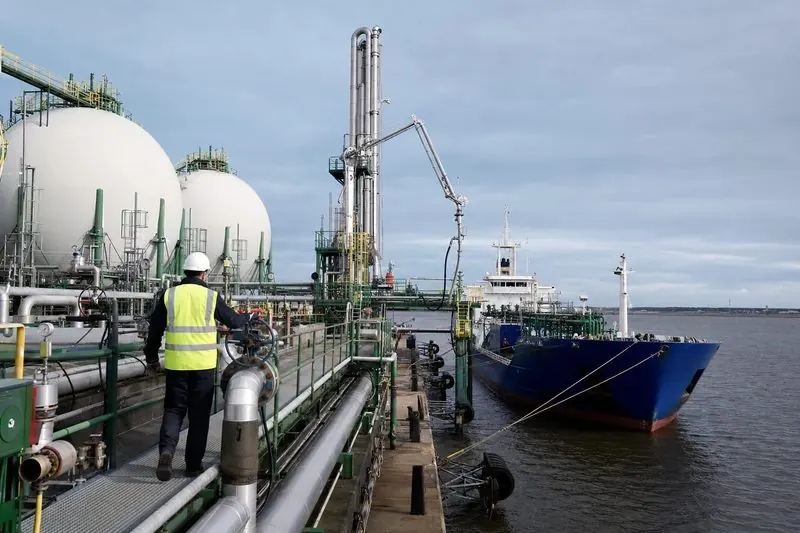
Brunsbüttel is the central German node for ammonia imports, and the reason it is more than a plan is the Yara terminal. Yara Clean Ammonia operates the first ammonia import terminal in Germany that is actually in service, which makes the site the country's central physical gateway for the green molecule. This is not a project on a timeline but a working facility, which is what gives Brunsbüttel its weight in any discussion of where imported hydrogen first reaches German soil.
The scale is set by the terminal's throughput. The Yara terminal has been officially in operation since 2 October 2024 and can import up to 3 million tonnes of low-carbon ammonia per year. That is equivalent to about 530,000 tonnes of hydrogen, or about 5 percent of the European hydrogen target for 2030. A single terminal covering a twentieth of the EU 2030 target is a useful measure of how concentrated the import gateway is: a small number of large terminals, not a diffuse network, will carry the bulk of the imported molecules.
The import path builds on what is already there. Yara is the world's largest ammonia trader and has run ammonia production on the Brunsbüttel site for about 50 years, so the terminal sits on five decades of operational experience with the molecule, its handling and its trade. This is the practical reason the first operational terminal is a Yara terminal: the company brought the trading relationships, the site and the know-how with it, and the import terminal extends an existing footprint rather than starting cold.
The location is the second pillar. Brunsbüttel lies on the North Sea and the Kiel Canal, next to the LNG facilities at the same site, which makes it a logistics energy hub rather than a single-purpose berth. The ammonia projects sit in immediate proximity to the planned German LNG Terminal and draw on the same hub logistics, deep-water access and pipeline connections. For an importer, that clustering matters: a hub concentrates the berths, the storage and the onward connections that an import flow needs, and Brunsbüttel is the German site where that clustering is furthest along.
The RWE terminal and the ammonia cracker
Alongside Yara, RWE plans a second, separate import terminal at the same Brunsbüttel site, and it is here that the cracker enters the picture. The RWE project is distinct from the Yara terminal, with its own capacity build-out and, in a later phase, an industrial cracker that splits ammonia back into green hydrogen and feeds it directly to industry. Keeping the two projects apart is essential: Yara is in operation and handles ammonia, while RWE is planned and is the project that brings the on-site cracker.

The RWE volumes start modestly and scale. Imports are planned from 2026 with about 300,000 tonnes of ammonia per year, scalable to up to 2 million tonnes per year as the project grows. The second phase adds the industrial cracker, which splits the ammonia into hydrogen, together with a dedicated hydrogen pipeline that delivers the gas to industrial customers. That pipeline is a sink connection, not a network topic in itself; what matters here is that the RWE concept carries the molecule all the way from the ship to a hydrogen-consuming plant on shore.
One frequent confusion has to be cleared up. The much-cited floating ammonia cracker by Höegh Evi with Deutsche ReGas is at Lubmin on the Baltic, not at Brunsbüttel, with a final investment decision targeted for the end of 2025 and operation in late 2027. Brunsbüttel and Lubmin are two different sites with two different projects, and they must not be conflated. The on-site cracker that belongs to the Brunsbüttel story is the RWE one in phase two; the Lubmin floating cracker is a separate Baltic project and is mentioned here only to keep the map straight.
Cracking is the central cost and efficiency factor of the import path. Splitting ammonia back into hydrogen costs energy, so every tonne that is cracked carries a conversion penalty that direct use avoids. This is why the choice between using ammonia directly, in industry, fertiliser or as a marine fuel, and cracking it back into hydrogen is the first strategic decision an importer faces: direct use keeps the molecule cheaper but limits the buyers, while cracking opens the hydrogen market at the price of an energy loss. The right answer depends on the off-taker and the sink, which is exactly why the import path cannot be designed without the demand side in view.
From molecule to proof: what imported volumes must carry
A physical import gateway is only half the story. Imported ammonia is eligible for funding, countable against quotas and saleable as green only if its sustainability and origin are documented without a gap, and the core of that documentation is digital. The instrument that carries it is the Proof of Sustainability (PoS), a digital declaration by the certified producer that a given quantity is RFNBO-compliant. Without that proof travelling with it, even a genuinely green tonne is, in regulatory terms, just ammonia.
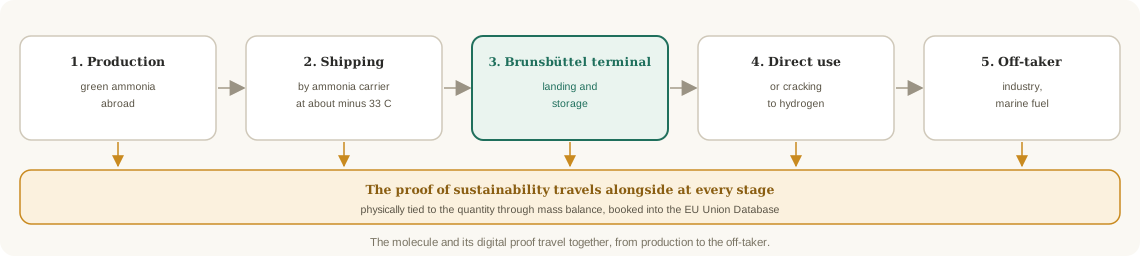
The decisive rule is how the proof is bound to the molecule. Under RED III the PoS must be physically tied to the traded molecule through mass balance, not book-and-claim. In practice that means the green attribute cannot be sold separately from a physical flow: it stays with an assigned, physical quantity through the chain, so the paper and the molecule move together. The full mechanics of mass balance and RFNBO certification are set out in a separate article on RFNBO certification and mass balancing, which this analysis takes as the precondition rather than repeating.
The proof travels the whole import chain. It runs alongside the volume from the producer abroad, through shipping by ammonia carrier, into the Brunsbüttel terminal and its storage, and on to the off-taker, and it is updated at every change of ownership. Each handover is a point where the documentation has to keep pace with the molecule, so the proof chain is as long as the physical chain and breaks if any link is missed. This is why importers and terminal operators have to design the documentation flow at the same time as the physical flow, not bolt it on afterwards.
Cracking and blending at the terminal put mass balance to the test. When ammonia is cracked into hydrogen, or when green and other volumes are stored together, the mass balance has to carry the assigned green quantity cleanly through the conversion and the mixing, so that the right number of green tonnes, and no more, emerge with their proof intact. Getting this accounting right at the terminal is the technical heart of an import operation: it is where a clean physical operation can still produce a broken proof if the bookkeeping is not exact.
The digital proof chain: the Union Database and traceability tools
The documentation flow for imported molecules is increasingly handled digitally, and at its centre sits a single ledger. All Proofs of Sustainability must be booked into the EU Union Database, the central digital booking point against double counting, with national registers exchanging data with it. The Union Database is the authoritative record: a green tonne that is not booked there is not, for European purposes, accounted for, and it is the mechanism that stops the same green attribute being claimed twice across borders.

Around that ledger, a layer of platform and blockchain tools secures the flow. H2Global published a policy brief on blockchain in hydrogen certification in September 2023, setting out the case on traceability, transparency and interoperability. The argument is that a shared, tamper-resistant record can move the proof along the chain faster and with fewer manual reconciliations than email and spreadsheets, which is precisely the friction that a multi-party import chain produces at each handover.
The operational examples are already concrete. GreenToken by SAP, working with TÜV NORD, the Siemens Energy Clean Energy Certification, working with TÜV SÜD and dena, and an ISCC pilot with Circularise all aim at the same thing: a digital, verifiable trail for the green attribute as it moves through production, conversion and trade. For an importer assessing these tools, the relevant question is not which platform is most sophisticated but which one integrates cleanly with the audit trail and the Union Database that it has to feed regardless.
The boundary is important and easy to get wrong. These tools secure and accelerate the document flow; they do not replace the audits and they do not replace the Union Database. A blockchain record is not a certification, and a platform entry is not a Union Database booking. Treating a traceability tool as a substitute for the audit or the central ledger is the classic error, and it is the one an importer or terminal operator most needs to avoid when buying into the digital layer.
What importers and terminal operators should do now
The physical import gateway stands in part, with Yara in operation, and is taking shape in part, with the RWE terminal and the cracker planned, while the digital proof framework forms in parallel. For importers, terminal operators and off-takers the practical message is that the volume path and the proof chain have to be thought through together, not in sequence: a flawless physical operation with a broken proof delivers a tonne that cannot be sold as green.
The first decision is the import path itself. The choice between using ammonia directly, in industry, fertiliser or as a marine fuel, and cracking it back into hydrogen sets the efficiency, the cost and the sink connection of the whole operation, because cracking carries an energy penalty that direct use avoids. That decision should be taken with the off-taker and the sink in view from the start, since the value of the molecule, and whether the cracking penalty is worth paying, depends entirely on who buys it and in what form.
The points below turn the import logic into a near-term action list for importers and terminal operators.
- Fix the import path early. Decide between direct use of ammonia and cracking back into hydrogen with the efficiency loss and the sink connection in view, and design the molecule path around the off-taker rather than choosing the carrier first and finding a buyer later.
- Plan the digital proof from the start. Build the Proof of Sustainability, the mass balance across ship and terminal and the booking into the EU Union Database into the operation from day one, taking RFNBO certification as the precondition rather than an afterthought.
- Use traceability tools as accelerators, not substitutes. Assess GreenToken by SAP, the Siemens Energy Clean Energy Certification and the Circularise and ISCC pilot as ways to speed and secure the document flow, but do not confuse them with the audit obligation or the Union Database booking that they sit on top of.
- Keep funding and infrastructure clearly apart. Treat import funding (H2Global, and on the production side the EU Hydrogen Bank) as the instrument that closes the price gap, and the terminal, the cracker, the proof chain and any onward storage as the physical and documentary substance, rather than blurring the two.
Further reading
Frequently asked questions
Germany will have to import a large share of its hydrogen, and most of it arrives not as pure hydrogen but as green ammonia. Ammonia has the highest volumetric hydrogen density among the market-ready carriers, at about 105 to 121 kg H2/m3, well ahead of liquid hydrogen at about 71 and LOHC at about 54. It can be shipped liquefied at about minus 33 C and ambient pressure on the existing fleet, with established tanks and a world trade that has worked for decades. It is also usable directly, as an industrial feedstock, a fertiliser precursor or a marine fuel, or it can be cracked back into hydrogen. Per the IEA, ammonia is the cheapest transport option across most distance and volume combinations, even including reconversion.
There are two separate ammonia import projects in Brunsbüttel. The Yara Clean Ammonia terminal has been officially in operation since 2 October 2024 and can import up to 3 million tonnes of low-carbon ammonia per year, equivalent to about 530,000 t of hydrogen or about 5 percent of the EU 2030 hydrogen target. Yara is the world's largest ammonia trader and has run ammonia production on the site for about 50 years. The RWE terminal is a separate, planned project at the same location: from 2026 about 300,000 t of green ammonia per year, scalable to up to 2 million t, with an industrial cracker and a dedicated hydrogen pipeline planned for phase two. Brunsbüttel sits on the North Sea and the Kiel Canal and is also an LNG location, which makes it a logistics energy hub.
Imported ammonia is either used directly, in industry, fertiliser or as a marine fuel, or it is cracked back into hydrogen. The Yara terminal handles ammonia first, with cracking taking place at the point of use; a dedicated industrial cracker on the Brunsbüttel site is part of the RWE plan for phase two, feeding hydrogen to industrial customers through a dedicated pipeline. The much-cited floating ammonia cracker by Höegh Evi with Deutsche ReGas is at Lubmin on the Baltic, not Brunsbüttel, with FID targeted for the end of 2025 and operation in late 2027; the two sites must not be conflated. Cracking costs energy and is the central efficiency and cost factor of the import path, which direct use of ammonia avoids.
The Proof of Sustainability (PoS) is the core digital proof for an imported volume: a digital declaration by the certified producer that a given quantity is RFNBO-compliant. Under RED III the PoS must be physically tied to the traded molecule through mass balance, not book-and-claim, so it travels along the import chain, from the producer abroad through shipping, the terminal and on to the off-taker, and is updated at every change of ownership. The RFNBO certification behind it is a precondition and is covered in a separate article. The digital proof is what makes an imported tonne eligible for funding, countable against quotas and saleable as green.
All Proofs of Sustainability must be booked into the EU Union Database, the central digital ledger against double counting, which exchanges data with national registers. Beyond that, platform and blockchain tools secure and speed the documentation flow: H2Global published a policy brief on blockchain in hydrogen certification in September 2023, and operational examples include GreenToken by SAP (with TÜV NORD), the Siemens Energy Clean Energy Certification (with TÜV SÜD and dena) and an ISCC pilot with Circularise. These tools do not replace the audits or the Union Database; they secure and accelerate the document flow that sits on top of them.