The Gas Network Area Transformation Plan (GTP): Digital H2 Infrastructure Planning for Distribution Operators
It determines, per network area, which sections are converted to hydrogen, repurposed or decommissioned. The nationwide process is coordinated through the H2vorOrt initiative with DVGW and VKU, and the guideline for the GTP 2025 is confirmed as DVGW code of practice G 2100.
The GTP plans the conversion of the gas distribution grids toward hydrogen and decarbonisation. In it, gas distribution grid operators decide per network area, in an open-ended way, between conversion, repurposing and decommissioning, on the basis of georeferenced grid data, uniform templates and scenario-based forecasts, aligned with the hydrogen core network. The legal driver is EU directive 2024/1788 with a transposition deadline of 5 August 2026, which is transposed nationally in the EnWG draft with mandatory distribution network development plans.
The gas network area transformation plan is the standardised planning instrument with which gas distribution grid operators plan the conversion of their grids toward hydrogen. Per network area, they decide in an open-ended way between three paths: conversion to hydrogen, repurposing with partial decommissioning or permanent decommissioning. The nationwide process is coordinated through the H2vorOrt initiative with DVGW and VKU, and the guideline for the GTP 2025 was published on 14 May 2025 and confirmed as DVGW code of practice G 2100. Around 248 gas distribution grid operators took part in the GTP 2025, for the first time with regional transformation planning in around 40 regions together with transmission grid operators. The distribution is clear: around 60 percent plan a partial decommissioning, on average around a quarter of their grid, and around 10 percent a full decommissioning. The process is digital and georeferenced, it brings together grid data across around 700 grid operators and aligns it with the hydrogen core network. The legal driver is EU directive 2024/1788 with a transposition deadline of 5 August 2026, whose articles 56 and 57 require distribution network development plans. Nationally, the EnWG draft transposes this with mandatory distribution network development plans, a planning horizon of 10 to 15 years and a ten-year advance notification duty. The GTP is closely interlinked with municipal heat planning. The risks are real: uncertain hydrogen availability down to the distribution grid and a stranded-asset risk of up to 10 billion euro of unrecovered investments. Whoever builds clean GIS data, coordinates regionally early, sets up the GTP so that it is compatible with the future statutory plan and quantifies the stranded-asset risk plans on a solid footing.
What the gas network area transformation plan is
The gas network area transformation plan plans the conversion of the gas distribution grids toward hydrogen and decarbonisation. In it, gas distribution grid operators determine which network areas will in future be converted to hydrogen, repurposed or decommissioned. The nationwide standardised process is coordinated through the H2vorOrt initiative with DVGW and VKU.
At its core, the GTP is the standardised planning instrument of gas distribution grid operators for the decarbonisation of their grids. It is created by the grid operators themselves, but the process is coordinated nationwide through the H2vorOrt initiative together with the Deutscher Verein des Gas- und Wasserfaches and the Verband kommunaler Unternehmen. The basis is the guideline for the GTP 2025, which was published on 14 May 2025 and confirmed as DVGW code of practice G 2100. This code is the first to systematically integrate the requirements of the EU gas internal market directive 2024/1788. Around 248 gas distribution grid operators took part in the GTP 2025, for the first time supplemented by regional transformation planning in around 40 regions together with the transmission grid operators. The process is open-ended and digital: georeferenced grid data, standardised templates and scenario-based forecasts are brought together across around 700 grid operators and aligned with the approved hydrogen core network. The GTP thereby covers a large part of the around 530,000 to 560,000 kilometres of gas distribution grid in Germany.
Convert, repurpose or decommission
The core of every plan is the decision per network area. Three paths are open, and the distribution is clear: most grid operators plan partial decommissioning, a smaller share the full decommissioning.
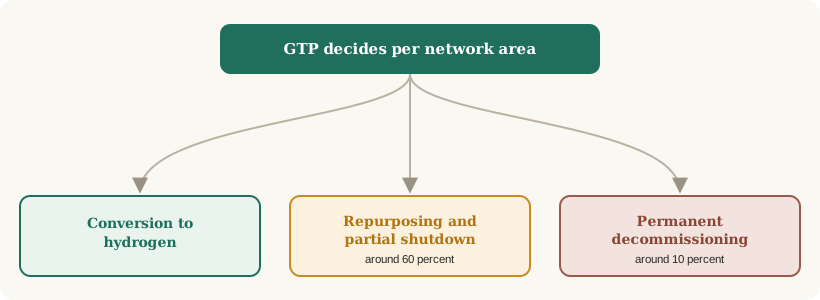
In detail, the three paths differ in goal and reach. The first path is conversion to hydrogen for suitable grid sections, where the first sections fully converted to hydrogen are expected from around 2035. The second path is repurposing with partial decommissioning, that is the concentration of the grid on viable sections while less-used strands are dismantled. Around 60 percent of grid operators plan such a partial decommissioning, on average around a quarter of their pipeline stock. The third path is the permanent decommissioning of the entire grid, which around 10 percent of grid operators envisage for their area. Which path makes sense per network area depends on the future heat supply, the expected hydrogen availability and municipal heat planning. What matters is that the GTP does not prescribe this decision but takes it in an open-ended way per area on the basis of data and scenarios.
Digital planning: GIS, scenarios, regional coordination
The GTP is unthinkable without data. Georeferenced grid data, uniform templates and scenarios with a target horizon of 2045 form the basis. New in the GTP 2025 is the regional transformation planning in around 40 regions.

In detail, the GTP methodology rests on four building blocks. First, georeferenced grid and infrastructure data form the basis, that is the digitised stock of every pipeline, every pressure regulating station and every connection, by material and asset type the same stock that has set the survey intervals under the EU Methane Regulation since 2025. Second, standardised feedback templates from the guideline G 2100 ensure that grid operators and the region report by the same logic and that the results remain comparable across around 700 grid operators. Third, the regional transformation planning is new: in around 40 regions, distribution and transmission grid operators coordinate together so that the distribution grid planning connects to the hydrogen core network and the regional hydrogen availability. Fourth, a customer survey of industry, commerce and municipalities feeds in, estimating the future demand per area. From these building blocks arise scenario-based forecasts with a target horizon of 2045, which justify the path between conversion, repurposing and decommissioning per network area. The quality of this planning depends directly on the quality of the GIS data, which is why its digitisation and upkeep become the actual groundwork of every grid operator.
EU directive, EnWG and the deadlines
The voluntary standard becomes binding law. EU directive 2024/1788 makes distribution network development plans mandatory, and the EnWG draft transposes this nationally. In parallel run the deadlines of municipal heat planning.
For practice, this means an interplay of several deadlines. The legal driver is directive (EU) 2024/1788, in force since 4 August 2024, whose articles 56 and 57 require distribution network development plans for build-out, conversion and decommissioning of gas grids. The transposition deadline runs until 5 August 2026. Nationally, the EnWG draft introduces mandatory distribution network development plans, with a planning horizon of 10 to 15 years and a ten-year advance notification duty before a connection disconnection. The GTP thereby moves from a voluntary industry standard to the basis of a statutorily anchored plan. In parallel apply the deadlines of the GTP 2025: company-specific plans by 30 September 2025, regional coordination by 31 December 2025 and the long-term forecast by 28 February 2026. In addition, the GTP is closely interlinked with municipal heat planning, which under the Waermeplanungsgesetz obliges large cities to plan by 30 June 2026 and smaller municipalities by 30 June 2028. This link must be clearly distinguished from market communication and from guarantees of origin: the GTP plans the physical grid infrastructure, not the data exchange between market roles and not the certification of green gases.
Challenges and risks
The transformation is expensive and uncertain. Whether enough hydrogen reaches the distribution grid is contested, and unrecovered investments loom. An honest view has to name this, rather than painting the conversion only as orderly progress.

In detail, the risks lie on several levels. First, hydrogen availability down to the distribution grid level is uncertain, because the approved core network first opens up large consumers and industry, not every residential street. Whether and when green hydrogen arrives across the area is an open question, on which the viability of every conversion decision depends. Second, stranded assets of up to 10 billion euro loom, that is investments in pipelines and plants that, in the event of a decommissioning, can no longer be recovered through the grid charges. Third, incentive regulation sets misincentives, because it is geared to investment and grid operation and not to an orderly decommissioning, so that grid operators decommissioning early can be at a regulatory disadvantage. The move to RAMEN Gas and GasNEF from 2028 does not change that in principle. Fourth, the coordination of the GTP, municipal heat planning and the core network with their different deadlines is demanding, because decisions at one level immediately affect the others. A balanced view recognises both the value of a uniform, data-based transformation planning and these real gaps from availability, financing and coordination.
Watch the stranded-asset risk: Investments in a grid that is later decommissioned or only partly repurposed can hardly be recovered through the grid charges, whose capital component depends from 2028 on the gas WACC. Industry estimates put this risk at up to 10 billion euro. Whoever makes investments without having clarified the path of the affected network area in the GTP, or whoever starts the decommissioning planning too late, increases this risk. Early, data-based planning per network area is the most effective lever to limit it.
The GTP is a sensible step toward a uniform, data-based transformation planning of the gas distribution grids and at the same time carries considerable uncertainty. The open hydrogen availability down to the distribution grid, a stranded-asset risk of up to 10 billion euro, the misincentives of incentive regulation and the demanding coordination of the GTP, municipal heat planning and the core network belong honestly on the table. Whoever sees both, the value of orderly planning and the real risks, can do the groundwork in a targeted way and avoid expensive late starts.
What companies should do now
The GTP is a data and strategy task with hard deadlines. Whoever builds clean GIS data and coordinates regionally early plans on a solid footing and avoids expensive late starts. This turns the deadlines into a concrete plan.
-
Meet the deadlines
Meet the GTP deadlines for 2025 and 2026, that is the company-specific plan by 30 September 2025, the regional coordination by 31 December 2025 and the long-term forecast by 28 February 2026. Whoever plans these dates as a binding framework and assigns internal responsibilities avoids bottlenecks shortly before the reference dates. These deadlines are the basis for the later statutory obligation from the EU directive and the EnWG draft.
-
Make it compatible with the EnWG plan
Set up the GTP from the outset so that it is compatible with the future statutory distribution network development plan. Since EU directive 2024/1788 is to be transposed by 5 August 2026 and the EnWG draft provides for mandatory distribution network development plans with a ten-year advance notification duty, an early alignment with these requirements saves later rework. Whoever thinks the voluntary GTP and the coming mandatory plan together does not build twice.
-
Quality-assure GIS data
Digitise the GIS and grid data and assure their quality, since they are the basis of every scenario and decommissioning plan. A complete, georeferenced stock of pipelines, pressure regulating stations and connections decides how solid the path decision per network area turns out to be. Whoever invests here turns the GTP into a reliable planning tool rather than an estimate.
-
Quantify the stranded-asset risk
Quantify the stranded-asset risk and use early decommissioning planning as a cost lever. Investments in grid sections that are later decommissioned can hardly be recovered, and the industry risk runs to up to 10 billion euro. Whoever quantifies this risk per network area and aligns investments with the planned path avoids misinvestment and can justify early, orderly decommissioning economically.
Further reading
Frequently asked questions
The gas network area transformation plan is the standardised planning instrument of gas distribution grid operators for the decarbonisation of their grids. In it, each grid operator determines, per network area, which sections are converted to hydrogen, repurposed or decommissioned in future. The process is open-ended, digital and georeferenced and is aligned with the hydrogen core network. It is coordinated nationwide through the H2vorOrt initiative with DVGW and VKU.
The GTP is created by the gas distribution grid operators themselves, coordinated through the H2vorOrt initiative with the Deutscher Verein des Gas- und Wasserfaches and the Verband kommunaler Unternehmen. The basis is the guideline for the GTP 2025, which was published on 14 May 2025 and confirmed as DVGW code of practice G 2100. This code is the first to systematically integrate the requirements of the EU gas internal market directive 2024/1788.
For the GTP 2025, company-specific plans were due by 30 September 2025, the regional coordination by 31 December 2025 and the long-term forecast by 28 February 2026. Legally decisive is the transposition deadline of EU directive 2024/1788 on 5 August 2026. In parallel run the deadlines of municipal heat planning, large cities by 30 June 2026 and smaller municipalities by 30 June 2028.
The GTP and municipal heat planning are closely interlinked. The municipality's heat plan determines which areas will in future be supplied through district heating, heat pumps or green gases, and on this basis the GTP plans the future of the gas distribution grid per area. The Waermeplanungsgesetz obliges large cities to plan by 30 June 2026 and smaller municipalities by 30 June 2028. Grid operators must align the GTP, municipal heat planning and the hydrogen core network with their different deadlines.
Distribution grid operators should first meet the mandatory GTP deadlines for 2025 and 2026 and set up the GTP so that it is compatible with the future statutory distribution network development plan. They should also digitise and quality-assure the GIS and grid data, since these are the basis of every scenario and decommissioning plan. Finally, they should quantify the stranded-asset risk and use early decommissioning planning as a cost lever.
Let's collaborate
One contact, a team behind it
Thirty minutes on what you're working on, whether grid, metering, market processes, IT architecture or AI. Afterwards you'll know how we'd approach it and who would sit at the table.
Energy and measurement technology since 2010 · innobu GmbH since 2014 · Based in Schleswig-Holstein, Germany
Whoever pitches also delivers: whoever leads the first call stays your contact right through to the steering committee, with established partners in the project. Direct: info@innobu.com