FFVAV: remote-readable heat meters become mandatory by end of 2026
This article sets out the FFVAV in six steps: what the deadline requires, why the FFVAV and the heating cost regulation are two separate regimes, what is required technically, what the monthly consumption information means, where implementation really gets stuck and what suppliers should do now.
The FFVAV requires district-heating and district-cooling suppliers to retrofit or replace old heat meters so they are remotely readable by 31 December 2026 inclusive. Devices installed after 5 October 2021 had to be remotely readable from the outset. Remotely readable means the meter can be read without access to the individual usage unit. The regulation demands more than a radio module. The meters must be interoperable across manufacturers, so that no lock-in arises and a change of service provider does not block remote reading, and they must ensure data protection and data security. Once remotely readable devices are in place, the supplier has had to provide monthly billing and consumption information free of charge since 1 January 2022, with comparison values. The distinction matters: the FFVAV is not the heating cost regulation. Both name 31 December 2026, but the FFVAV governs the supplier at the building connection, while the heating cost regulation governs the landlord inside the building. The hardest hurdle is not the meter but the system integration. Heat meter data lacks the standardised market communication processes that exist for electricity and gas, and whether a connection to the smart meter gateway is mandatory is regulatorily open. Suppliers need a bridge system that translates the metering data from the IoT world into the language of the billing systems. The state of implementation is uneven. In 2023, fewer than half of suppliers had the software for consumption information ready, and individual utilities have been retrofitting their meters for years. District heating supplies around 14 percent of households in Germany through roughly 3,800 networks, so the duty affects metering across the board. For suppliers this means: inventory the installed base, choose technology that stays open across manufacturers, automate the data flow from meter to billing, and test the gateway option early, before meters and installation capacity run short close to the deadline.
What it is about: the second clock in heat metering
The FFVAV retrofit deadline ends on 31 December 2026. By then, every district-heating and district-cooling supplier must have retrofitted or replaced all heat meters that are not remotely readable. The FFVAV is the regulation on consumption recording and billing for the supply of district heating or district cooling. It entered into force on 5 October 2021 and transposes the EU Energy Efficiency Directive into German law.
The mechanics of the deadline are staggered. Meters installed after 5 October 2021 had to be remotely readable from the start. For older devices, 31 December 2026 is the cut-off. Remotely readable means the meter can be read without access to the individual usage unit, so without anyone having to enter the flat or the locked plant room.
The topic looks small but is not. District heating covers around 14 percent of households in Germany, roughly 6 million dwellings, across about 3,800 networks. The duty therefore affects metering across the board, in every connected building. Anyone who underestimates the effort faces scarce devices and fully booked installers close to the deadline.
FFVAV is not HeizkostenV: two regimes, one deadline
Both regulations name 31 December 2026, but they govern different actors and devices. Confuse the two and you address the wrong duty. The FFVAV concerns the supplier at the building connection, the heating cost regulation the landlord inside the building.
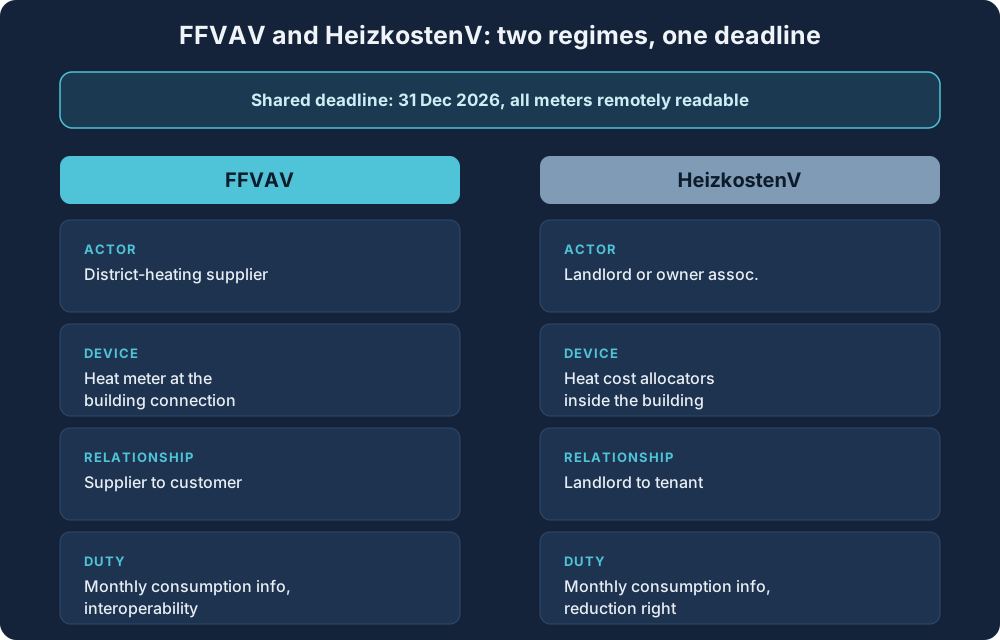
The heating cost regulation governs how heating costs are allocated inside a building. It addresses the landlord or the owner association and concerns the heat cost allocators and sub-meters in the individual flats, that is sub-metering in the landlord-to-tenant relationship. There, the tenant has a right to reduce the bill if the duties are not met.
The FFVAV governs the relationship between the district-heating supplier and the customer. Its subject is the heat meter at the building connection, where the heat delivered is measured and billed. Responsibility for the FFVAV duties lies with the supplier, not the building owner. This assignment decides who organises, pays for and documents the retrofit.
What is required technically: remote readability and interoperability
The FFVAV asks for more than a radio module on the meter. Section 3 prescribes interoperability and data security, so that no manufacturer lock-in arises. A remotely readable meter must work with devices of the same kind from other manufacturers, and a change of metering or billing service provider must not make remote reading impossible.

In practice, several transmission paths are available. LoRaWAN suits suppliers that already run network coverage, NB-IoT is an alternative without an own radio network, and walk-by solutions count as a stopgap with high manual effort. Radio reception in the basement, the power supply at the meter location and data quality are the most common technical obstacles. How this plays out together with the multi-utility remote reading via the smart meter gateway is an architecture decision in its own right.
The monthly consumption information as a standing duty
Remote readability is not an end in itself. Once the devices are remotely readable, the supplier has had to provide monthly consumption information since 1 January 2022, on an ongoing basis and free of charge. A one-off retrofit thereby turns into a standing data duty.
The content is clearly defined. It shows the consumption of the past month, a comparison with the previous month and the same month last year, and a reference to a normalised average user. It is provided by post as the default, or electronically as soon as the customer requests it. This rule resembles the requirement in the heating cost regulation, but here it falls on the supplier.
The real effort lies in the repetition. Twelve times a year, for every connected customer, the information has to be produced correctly and delivered. Manual processing does not scale that. It needs a continuous data flow from the meter through preparation to the customer information, otherwise the monthly duty eats every spare hour in the back office.
The real hurdle: missing market processes
The hardest part is not the meter but the data chain behind it. For heat meter data there is no standardised market communication as there is for electricity and gas. Where the electricity market has fixed processes and formats for data exchange, the heat market has to build much of it itself.

In concrete terms, many suppliers lack a bridge system that translates the metering data from the IoT world, which the Data Act gives users a right to access, into the language of the ERP and billing systems. Only this link turns a radio reading into a verified, billable consumption figure and feeds the monthly information. Without that automation, the consumption information stays handwork.
The role of the smart meter gateway is also open. A mandatory connection of heat meters is not prescribed under the current rules, but interpretations range from a general obligation to an obligation only on customer request, and the authorities reserve the right to set a requirement later. Anyone building the processes around the gateway at scale anyway should bring the heat segment along from the start.
State of implementation and risks
The sector is moving at uneven speeds. In 2023, fewer than half of suppliers had the software for consumption information ready, and both pace and technology choices vary widely. Individual utilities have been retrofitting their meters for years, for instance with LoRaWAN modules fitted during the meter exchange that is due anyway.
The risks are clear. Anyone starting late competes with everyone else for meters and installation capacity close to the deadline. Missing interoperability ties a supplier to one manufacturer and makes later changes expensive. And the monthly processing of consumption data demands a sound data protection concept under the GDPR, because personally identifiable data is processed here on a regular basis.
The biggest danger is not the single duty but the order of work: anyone who buys the radio technology first and builds the data chain later ends up with remotely readable meters but no automated monthly information. It makes more sense to settle the data architecture first and align the meter choice with it.
What suppliers should do now
With an eye on 31 December 2026, a sound data architecture counts for more than the fastest radio technology. Four steps are the priority.
Four priority steps
-
Inventory the installed base
Record which meters are already remotely readable, which are not and which calibration periods expire when. This list decides where a retrofit pays off and where a full replacement at the calibration date that is due anyway is cheaper.
-
Choose technology that stays open
Pick the transmission path and meter type so that interoperability is preserved, and secure it contractually. A lock-in to one manufacturer contradicts the FFVAV and makes later provider changes expensive.
-
Automate the data flow
Set up the path from meter through data preparation to the billing system as a continuous process, before the monthly duty overwhelms manual processing. The bridge system between IoT and ERP is the real project.
-
Settle the gateway option and data protection early
Treat the connection to the smart meter gateway as an option and start integration testing early, while documenting a data protection concept for the monthly processing. That keeps the solution ready to connect should an obligation arrive later.
The FFVAV does not stand alone. It draws on the same data base as the remote reading duty of the heating cost regulation, the new transparency duties of the AVBFernwärmeV and municipal heat planning. A supplier that sets up the data architecture behind metering cleanly meets several of these duties on one shared foundation.
Further reading
Frequently asked questions
The FFVAV is the German regulation on consumption recording and billing for the supply of district heating or district cooling. It entered into force on 5 October 2021 and implements the EU Energy Efficiency Directive. It governs the relationship between the district-heating supplier and the customer, that is the heat meters at the building connection, their remote readability, billing and consumption information. It is a regulation in its own right, separate from the heating cost regulation, which governs cost allocation inside a building.
Heat meters installed before 5 October 2021 that are not remotely readable must be retrofitted or replaced with remotely readable devices by 31 December 2026 inclusive. Devices installed after 5 October 2021 had to be remotely readable from the outset. Remotely readable means the meter can be read without access to the individual usage unit, so without an on-site appointment.
Both regulations name 31 December 2026 as the deadline for remote readability, but they govern different actors. The FFVAV covers the district-heating supplier and the heat meters at the building connection, that is the supplier-to-customer relationship. The heating cost regulation covers the landlord or owner association and the heat cost allocators inside the building, that is the landlord-to-tenant relationship. Responsibility for the FFVAV duties lies with the supplier, not the building owner.
Once remotely readable devices are in place, the supplier has had to provide monthly billing and consumption information free of charge since 1 January 2022. The information covers consumption, comparison values against the previous month and the same month last year, and a reference to a normalised average user. It is provided by post as the default or electronically at the customer's request. This requires a continuous, automated data flow from the meter to the customer information.
A mandatory connection of heat meters to the smart meter gateway is not prescribed under the current state of the rules. Interpretations range from a general obligation to an obligation only on customer request, and the authorities reserve the right to set a requirement later. Suppliers should treat the connection as an option and start integration testing early, because heat meter data lacks the standardised market processes that exist for electricity and gas.