ChatGPT Images 2.0: OpenAI's New Benchmark for AI Images
On April 21, 2026, OpenAI released a new generation of image generation with gpt-image-2. On LM Arena, the model leads at 1,512 points, 242 points ahead of Google Nano Banana 2. Thinking mode, multi-image batch with up to 8 consistent images and near-perfect typography open up new use cases for marketing, product and communications. At the same time, the EU AI Act's transparency obligations for AI-generated content become enforceable on August 2, 2026.
OpenAI released ChatGPT Images 2.0, API name gpt-image-2, on April 21, 2026. The model scored 1,512 points on LM Arena and beat Nano Banana 2 (1,271 points) by 242 points, the largest margin ever recorded on this leaderboard. New capabilities include a thinking mode with web search, up to 8 coherent images per prompt with character continuity, near-100 percent typography accuracy and flexible aspect ratios from 3:1 to 1:3 at 2K resolution. Via the API, a 1024 by 1024 image in high quality costs 0.211 USD, while thinking mode in ChatGPT requires Plus (20 USD per month), Pro, Business or Enterprise. For European enterprises, the release arrives alongside the EU AI Act: Article 50 becomes enforceable on August 2, 2026, with machine-readable labeling required and fines of up to 35 million EUR or 7 percent of global revenue. OpenAI automatically embeds C2PA content credentials, but those metadata disappear after a screenshot or a conversion to formats without metadata support. Recommendation: launch a pilot in marketing or product, set up an AI-Act-compliant policy by July 2026, and evaluate a multi-model strategy across gpt-image-2, Nano Banana 2 and specialized stylized tools.
Overview: What ChatGPT Images 2.0 Really Is
ChatGPT Images 2.0 is a generational leap, not an incremental update. OpenAI released the model, API name gpt-image-2, on April 21, 2026, and made it available simultaneously in ChatGPT, Codex and the OpenAI API. Within twelve hours on LM Arena it took the number 1 position across all three categories: text-to-image, single-image-edit and multi-image-edit.
The release reshuffles the market. Nano Banana 2 (Gemini 3.1 Flash Image) was widely considered the reference, as we covered in the article on Google Nano Banana AI. With gpt-image-2 OpenAI shifts the frame back toward its own platform. The target audience is enterprises that use image generation in production, especially marketing, product, corporate communications and internal creative teams.
Within 12 hours of its release, gpt-image-2 had claimed the number 1 spot across every category on the Image Arena leaderboard by a plus 242 point margin, the largest lead ever recorded on that leaderboard.
What the Model Actually Does Better
Four technical jumps shape the performance lead. They target the weak spots where earlier image models still failed after multiple iterations: messy text, lack of continuity in series, weak multilingual support and rigid formats.
Text Rendering
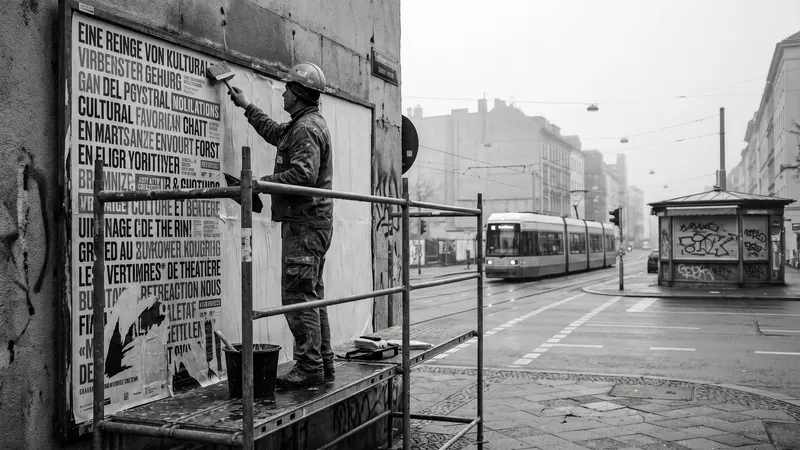
Magazine covers, infographics, UI mockups and even barcodes come out readable on the first pass. LM Arena blind tests show close to 100 percent typography accuracy.
Thinking Mode
The model plans the layout, searches the web for up-to-date facts, verifies its own output and produces up to 8 consistent images with the same character, style and objects.
Multilingual Scripts
Japanese, Korean, Chinese, Hindi and Bengali now work reliably. German umlauts and ß render cleanly in early hands-on tests.
Flexible Formats
Aspect ratios from 3:1 landscape to 1:3 portrait selectable directly in the prompt. Standard 2K (2,048 by 2,048), 4K experimental via fal.ai.
Web Search Integrated
Thinking mode gives gpt-image-2 live access to current information during generation, for example up-to-date prices on a menu or same-day events.
Output Verification
The model inspects its own first draft, checks text, hands and detail, and corrects on its own. Users iterate less.
The multi-image batch is the most practical jump for enterprises. A four-piece Instagram post series for a product, same cup, same color palette, same branding across all frames, comes out of one prompt instead of four hand-matched generations. For landing pages or catalog assets, that shrinks the review loop.
Why text rendering is the real lever: Until gpt-image-2, text on AI-generated images was unusable in 30 to 50 percent of cases. Every magazine cover, every product mockup, every infographic idea had to be cleaned up in Photoshop. At 99 percent accuracy that step vanishes, and with it one of the last reasons to keep AI images locked into moodboards.
Benchmark and Nano Banana 2 Comparison
LM Arena evaluates image models in blind pairwise comparisons: users rate pairs without knowing which model produced which output. A 242-point lead does not mean Nano Banana 2 is weak; it means gpt-image-2 is significantly ahead in three categories at once.
| Criterion | gpt-image-2 (OpenAI) | Nano Banana 2 (Google Gemini 3.1) |
|---|---|---|
| LM Arena score | 1,512 points (rank 1) | 1,271 points (rank 2) |
| Text rendering | near 100 percent accuracy | good, occasional word errors |
| Photorealism | strong, slightly more stylised | leading, cinematic lighting |
| Multi-image coherence | up to 8 images per prompt with character continuity | edit-focused, no native batch at this size |
| Instant-mode speed | roughly twice as fast as GPT Image 1.5 | under 3 seconds for 2K images |
| Indicative price | 0.211 USD per 1024 by 1024 high quality | noticeably cheaper, 95 percent of Pro quality |
| Best for | final assets with text, magazine covers, multilingual | iteration, moodboards, high-volume photo workflows |
Rule of thumb for teams on a budget: use gpt-image-2 where text on the image matters, Nano Banana 2 where the photo look and iteration speed count. Both models can be called through gateways such as fal.ai or alongside the Flux 2 Pro ecosystem in a single-API strategy.
GPT Image 2 wins on structural control and text rendering, while Nano Banana 2 wins on photorealism and generation speed.
Miraflow AI, Comparison Report April 2026API Cost and Access Model
OpenAI bills the API on a token basis and tiers prices by quality and resolution. The low-quality tier stays attractive for entry use; the high-quality per-unit price sits slightly above GPT Image 1.5, while larger formats become cheaper.
| Price dimension | Value | Context |
|---|---|---|
| Image input tokens | 8 USD per million | edit workflows, reference images |
| Image output tokens | 30 USD per million | standard billing |
| 1024 by 1024 low quality | 0.006 USD per image | moodboards, rapid iteration |
| 1024 by 1024 medium quality | 0.053 USD per image | social-media assets |
| 1024 by 1024 high quality | 0.211 USD per image | final assets, marketing |
| 1024 by 1536 high quality | 0.165 USD per image | cheaper than GPT Image 1.5 at 0.20 USD |
| 4K via fal.ai | 0.41 USD per image | print, out-of-home advertising |
The access model splits into three tiers. Instant mode is open to every ChatGPT user, including free. Thinking mode in ChatGPT requires Plus (20 USD per month), Pro (200 USD per month), Business or Enterprise. Via the API, thinking mode is available to every developer, though the 15 to 120 seconds of latency per request pushes teams toward asynchronous pipelines.
Careful with the straight-line math: High-quality images pay off for hero assets and campaigns, not for A/B iterations. A team testing 20 variants per campaign should run the early rounds in medium quality and generate only the finalists in high quality. That keeps the premium over GPT Image 1.5 barely noticeable.
The EU AI Act and the Labeling Obligation
The release lands for European firms right in the middle of their AI Act transparency preparations. Article 50 of the EU AI Act requires providers of generative AI systems to label synthetic content in a machine-readable way. Full enforcement starts on August 2, 2026, roughly three and a half months away.
gpt-image-2 release
OpenAI switches on ChatGPT Images 2.0 with thinking mode and multi-image batch. C2PA content credentials are embedded into every image automatically.
Implementation window for enterprises
European firms need to draft an internal policy on labeling AI-generated content, define approval processes and ensure their production pipelines preserve C2PA metadata end to end.
AI Act Article 50 fully in force
Transparency obligations become legally binding. AI-generated images must carry machine-readable labels. Violations can be fined up to 35 million EUR or 7 percent of global annual revenue.
Supervision by national authorities
Member States coordinate first market enforcements through their designated AI Act bodies. Complaints from competitors and consumer groups are expected. Some jurisdictions run parallel national enforcement.
The EU Draft Code of Practice mandates a layered approach. Providers must embed provenance metadata using the C2PA standard, add an invisible watermark at the pixel level that survives compression and cropping, and where that falls short, keep logs or digital fingerprints. OpenAI ships C2PA metadata by default. Screenshots, conversions to formats without metadata support or uploads to certain social platforms strip the label again.
Proximity to the enforcement date raises the pressure. Anyone who waited for concrete AI Act enforcement moves now has one quarter left to line up process, tooling and ownership.
Challenges and Critical Voices
The quality jump enlarges the abuse surface. Photorealistic scenes, precise typography and multilingual text make deepfakes, brand imitations and fraud attempts harder to spot, even for technically literate audiences.
Deepfake risk
Images become credible enough to fool non-experts. C2PA metadata only help while the file stays unchanged. Screenshots strip the label, which weakens the protection in the social web.
Copyright unresolved
OpenAI has not disclosed its training data. Litigation by The New York Times, Ta-Nehisi Coates and Jodi Picoult is ongoing. For enterprises, the question which brand assets sit inside the training set remains open.
Weak logo reproduction
Brand logos are not always reproduced exactly, even after multiple iterations. That is a problem for B2B assets that have to carry customer logos or brand layouts.
Thinking-mode latency
15 to 120 seconds per request rules out real-time use cases like live-chat images or interactive demos. Thinking mode belongs in async pipelines, not in user-facing loops.
What C2PA protection does not solve: the metadata are easy to strip, and even with metadata in place the images remain visually indistinguishable from photos. The regulatory frame protects documentation, not recognition by third parties. Enterprises should build their own approval processes rather than rely on technical watermarks alone.
Another critical voice comes from the design community. When multi-image batches with character continuity come out of a single prompt, the labor shifts from creation to curation. Agencies will have to reprice, because per-asset effort drops while strategy and review work gain weight. Meta's plan to automate the whole ad chain adds pressure, see our piece on Zuckerberg's AI advertising vision.
What Enterprises Should Do Now
The entry is manageable when strategy, tooling and compliance run in parallel. Six steps put organizations into a solid position over the next three months, before the AI Act obligations become enforceable on August 2, 2026.
-
Start a pilot in one team
Marketing, corporate communications or product are the obvious use cases. Measure cost per asset and iteration effort against the existing process. Two to three weeks are enough for a defensible cost baseline.
-
Design a multi-model strategy
Use gpt-image-2 for final assets with text, Nano Banana 2 for fast iterations and high-volume workflows, Midjourney or Flux for stylised needs. Gateway providers such as fal.ai or Vercel AI Gateway offer a single API for all three.
-
Draft an AI-Act-compliant policy
Cover Article 50 labeling, C2PA preservation across production steps and clear approval ownership. Aim for a signed-off policy by July 2026, leaving teams enough implementation runway.
-
Adapt the asset management system
DAM or PIM systems must retain C2PA metadata and treat labels as mandatory fields. Work with IT to identify export pipelines that strip metadata and fix those.
-
Establish a rights and brand review
Every AI-generated image with recognisable brand elements, people or third-party motifs goes through a four-eye review. Ban default prompts that imply third-party IP. Update agency contracts on AI usage.
-
Plan team enablement
Run internal sessions on prompt quality, thinking-mode usage and labeling rules. A small playbook of 10 use cases lowers the entry cost and prevents every team from inventing its own prompt patterns.
Connecting this to the running marketing AI strategy is essential. Teams already using strategic marketing prompts can add image generation as an extra layer, e.g. for visual companions to AI-generated text campaigns. Teams that already reviewed the visual AI advertising effectiveness study bring the context along.
gpt-image-2 is not just a tool upgrade. It is a cost shift, a process shift and a compliance shift at once. Enterprises that tackle policy, pipeline and model strategy in parallel will be operational by summer 2026. Those who wait face both AI Act enforcement and the tool learning curve at the same time in August 2026.
April to June 2026
Launch pilot, measure cost baseline, draft policy. Select and test a gateway API.
July to August 2026
Finalise policy, adapt asset management, run team training. Meet the AI Act deadline on August 2, 2026.
September to December 2026
Scale to more teams, measure ROI and process quality, prepare for first audits by supervisory authorities.
Further Reading
Frequently Asked Questions
ChatGPT Images 2.0 is the new generation of OpenAI's image model, released on April 21, 2026. The API name is gpt-image-2. It is OpenAI's first image model with integrated reasoning (thinking mode), can search the web during generation, and produces up to 8 consistent images per prompt. The model took the number 1 spot on LM Arena within hours with 1,512 points, 242 points ahead of Google Nano Banana 2.
On the LM Arena text-to-image leaderboard, gpt-image-2 holds 1,512 points against Google Nano Banana 2 (Gemini 3.1 Flash Image) at 1,271 points. The 242-point gap is, per VentureBeat, the largest margin ever recorded on this leaderboard. Nano Banana 2 still leads on photorealism and speed, gpt-image-2 leads on text rendering, layout control and multi-element composition.
The API is token-based. A 1024 by 1024 image costs 0.211 USD in high quality, 0.053 USD in medium quality and 0.006 USD in low quality. Image input tokens are 8 USD per million, image output tokens are 30 USD per million. 1,000 high-quality images amount to roughly 211 USD, 1,000 medium-quality images to about 53 USD.
Thinking mode is a reasoning pass that runs before the image is actually rendered. The model plans the layout, can search the web for up-to-date facts, verifies its own output and produces up to 8 coherent images per prompt with character and object continuity. Latency rises to 15 to 120 seconds. In ChatGPT, thinking mode is limited to Plus, Pro, Business and Enterprise tiers, while the API offers it to every developer.
Article 50 of the EU AI Act requires providers of generative AI to label synthetic content in a machine-readable way. Full transparency obligations become enforceable on August 2, 2026. The EU Draft Code of Practice mandates C2PA metadata, invisible watermarks and digital fingerprints. Violations can be fined up to 35 million EUR or 7 percent of global annual revenue.
OpenAI cites Japanese, Korean, Chinese, Hindi and Bengali as non-Latin scripts that now work reliably. German umlauts and ß render cleanly in first hands-on tests. Text rendering reaches close to 100 percent typography accuracy in LM Arena blind tests, including dense layouts such as magazine covers or infographics.
Let's collaborate
One contact, a team behind it
Thirty minutes on what you're working on, whether grid, metering, market processes, IT architecture or AI. Afterwards you'll know how we'd approach it and who would sit at the table.
Energy and measurement technology since 2010 · innobu GmbH since 2014 · Based in Schleswig-Holstein, Germany
Whoever pitches also delivers: whoever leads the first call stays your contact right through to the steering committee, with established partners in the project. Direct: info@innobu.com